

There’s a moment that happens when you taste something unfamiliar in a foreign place—a dish that catches you off guard, rearranges your assumptions about what food can be. That moment doesn’t stay behind when you board your flight home. It follows you into your kitchen, quietly reshaping everything you thought you knew about cooking.
What surprised me most wasn’t just discovering new ingredients or techniques. It was realizing that travel and reading about food could fundamentally change my relationship with my own stove. The meals I cook today bear little resemblance to what I prepared five years ago, and the transformation happened one trip, one cookbook, and one experiment at a time.
The Education of Eating Elsewhere
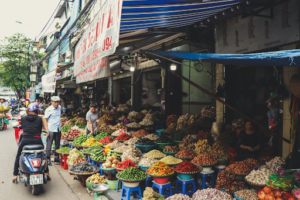
Travel teaches through immersion in ways that recipes alone cannot replicate. Standing in a market in Bangkok, watching a vendor build a dish from scratch, you absorb lessons about timing, heat, and balance that no written instruction could fully convey. You notice how cooks taste constantly, adjust fearlessly, and trust their instincts over rigid measurements.
That confidence became something I wanted to cultivate. Not arrogance, but the quiet assurance that comes from understanding your ingredients deeply enough to improvise. Travel gave me permission to stop treating recipes as rigid scripts and start seeing them as starting points for exploration.
Not Everything Needs First-Hand Experience
Source: Omnivore’s Cookbook
Not every culinary education requires a plane ticket. Some of my most transformative cooking moments have come from reading. Not just recipe collections, but food writing that places dishes within their cultural context. Understanding why a cuisine developed certain flavor profiles matters as much as knowing how to replicate them.
Reading about the history behind Chinese cooking, for instance, changed how I approach stir-frying entirely. Learning about the philosophy of balancing flavors (sweet, sour, salty, bitter, and umami working in harmony) gave me a framework I now apply to dishes from any tradition. A simple weeknight meal like honey garlic pork chops becomes an exercise in achieving that balance: the sweetness of honey against the savory depth of soy sauce, the sharpness of garlic mellowed by heat.
Books also introduced me to cuisines I haven’t yet experienced firsthand. I have knowledge of India, Morocco, and Peru, which has expanded my techniques and flavor combinations without ever visiting these places. Reading remains my most accessible form of culinary travel—available any evening, and requiring nothing more than curiosity and an open mind.
Bringing the Knowledge Home
The real transformation happens not abroad or in an armchair, but at the stove. Every trip and every book eventually leads back to the same place: your own kitchen, where theory meets practice and inspiration meets reality.
What I’ve learned is that recreating dishes exactly as you experienced them abroad is often less rewarding than adapting their spirit to your circumstances. The goal isn’t perfect replication—it’s integration. Taking a technique learned in one context and applying it to ingredients available in another. Borrowing a flavor principle from a cookbook and seeing how it transforms a familiar recipe.
My weeknight dinners now regularly feature components that would have intimidated me years ago. A quick Japanese-inspired miso glaze. A North African spice blend stirred into an otherwise ordinary soup. A classic Greek tzatziki served alongside grilled vegetables, because I remember how perfectly that combination worked at a taverna in Athens.
The Unexpected Confidence
Travel and reading together have given me what I can only describe as culinary courage—the willingness to try unfamiliar ingredients, to trust my palate, and to accept that not every experiment will succeed.
Before, I followed recipes exactly, afraid of deviation, and always worried about waste. Now I understand that cooking is inherently improvisational, that professional kitchens around the world operate on intuition as much as precision, and that the worst outcome of a failed experiment is simply an unremarkable dinner.
This confidence extends beyond technique into shopping and planning. I buy ingredients I don’t yet know how to use, trusting that curiosity will guide me toward something worthwhile. I browse international grocery stores with genuine excitement rather than confusion. The kitchen has become a place of possibility rather than obligation.
Final Thoughts
The way I cook today reflects everywhere I’ve been and everything I’ve read about food. All the information I consume affects my cooking in one way or another: a technique, a flavor combination, a new respect for traditions I’m still learning to understand.
Progress is slow and steady, with your knowledge expanding one meal at a time, but one day you will look back and realize you’ve become a different kind of cook entirely.