

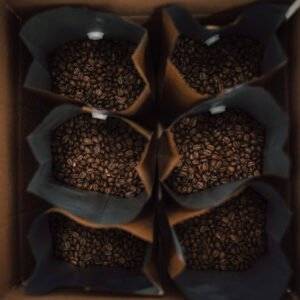
Picking a coffee subscription used to be simple. You chose a roast level, chose how often it arrived, and moved on. Now the decision tree is longer. Shoppers are reading ingredient panels on coffee bags the same way they read them on cereal boxes, asking about pesticide residue, processing methods, and whether “organic” actually means anything once the beans leave the farm.
The organic food market reached $71.6 billion in U.S. sales in 2024, according to the Organic Trade Association, with beverages among the fastest-growing categories. Coffee is a big part of that shift. An organic coffee subscription can be a genuinely informed purchase, as long as you know what to look for beyond the USDA seal.
What “Organic” Does and Doesn’t Cover
The USDA organic label is a real standard. It restricts the use of synthetic pesticides and fertilizers, excludes GMOs, and requires compliance with National Organic Program standards. For coffee, that matters. Conventionally grown coffee can involve pesticide use, which is one reason many buyers prioritize organic certification.
But it doesn’t cover everything. Organic certification governs how beans are grown, not what happens during transport, storage, or processing. Coffee is an agricultural product that moves through many hands over long distances, and mycotoxins, toxic compounds produced by mold, can accumulate at various points along that chain. Research on ochratoxin A in coffee has found that contamination risk is influenced by multiple post-harvest factors, including drying, storage, and transport. Ochratoxin A is a fungal toxin for which regulators in the EU have set limits: 3.0 μg/kg for roasted coffee and 5.0 μg/kg for soluble coffee.
None of this is cause for alarm. Most commercially sold coffee falls within regulatory thresholds. But for buyers who want more than the baseline, it explains why some brands invest in independent lab testing in addition to organic certification.
5 Organic Coffee Subscriptions Worth Considering
1. Purity Coffee
Purity was built for a specific kind of coffee drinker: one who treats their morning cup as part of a broader health routine and wants evidence to back up the claims on the bag.
Every lot starts with USDA-certified organic, specialty-grade Arabica beans scoring above 80 on the Specialty Coffee Association scale. Before roasting, independently verified labs screen each lot for pesticide residues, mold, mycotoxins, and other contaminants. Purity maintains a public page describing its laboratory testing and reported results. The company also develops roast profiles to minimize the formation of acrylamide and polycyclic aromatic hydrocarbons, while supporting the retention of antioxidants and related beneficial compounds.
The subscription lineup is purpose-built rather than exploratory. FLOW is the flagship everyday blend, designed for general health. EASE is a darker roast. CALM is the decaf option, processed using the Mountain Water Process, a solvent-free method the company says removes 99.9% of caffeine while preserving the bean’s beneficial compounds.
For buyers who have grown skeptical of vague wellness claims around coffee, the transparency of documented testing is the differentiator here.
Good fit for: health-focused buyers who want documented testing, not just marketing language.
2. Trade Coffee
Trade works more like a matchmaking service than a roaster. After completing a short preferences quiz, subscribers receive coffees sourced from over 55 specialty roasters across the country. The pool is wide and changes regularly, which makes it a strong option for anyone who enjoys discovery and variety over consistency.
Organic options are available on the platform, though they aren’t guaranteed in every shipment, as roasters vary in their certifications. For buyers who treat organic sourcing as a firm requirement rather than a preference, that is worth knowing upfront.
Good fit for: curious drinkers who want to explore the American specialty coffee landscape.
3. Equator Coffees
Equator is a California-based roaster with serious sourcing credentials. Its subscription program rotates through coffees that are Certified Fair Trade, USDA Organic, or Regenerative Organic Certified. They factor in soil health, farmer welfare, and biodiversity alongside standard organic requirements. More details on what Regenerative Organic Certified requires are available directly from the certifying body.
Selections are curated weekly by the roastery team, so it functions more like a thoughtfully chosen rotation than a purely custom service. For subscribers who want their coffee purchase to reflect environmental values beyond what is sprayed on the plant, Equator is one of the more substantive options available.
Good fit for: sustainability-focused buyers who want certifications that go beyond organic.
4. Dean’s Beans
Dean’s Beans has been doing direct trade before it was a marketing term. The Massachusetts-based roaster has a long-standing direct trade model built around relationships with farming cooperatives, prioritizing both organic sourcing and fair wages throughout. The subscription is flexible, covering various roast levels, grind sizes, and delivery frequencies ranging from one to twelve weeks.
What sets it apart from newer entrants is the depth of sourcing history. These are relationships built over years, not partnerships assembled to hit a certification checkbox.
Good fit for: buyers who want ethical sourcing with a long track record.
5. Pachamama Coffee
Pachamama’s model is unusual enough to be worth explaining. Coffee farmers from Peru, Nicaragua, Ethiopia, Guatemala, and Mexico own the cooperative. When a subscriber buys from Pachamama, profits flow back to farmer-owners through the cooperative’s ownership structure, not through a separate charitable giving program.
All coffees are certified organic, and the beans are roasted and sold directly. The variety of origins is narrower than a platform like Trade, but the directness of the supply chain is hard to match.
Good fit for: buyers motivated by direct-farmer equity, not just by ethical sourcing as a brand value.
The Questions Worth Asking Before You Subscribe
The coffee subscription market was valued at an estimated $934 million in 2025 and is projected to grow at a 11.1% compound annual growth rate through 2035, according to Fact.MR. Many brands have adopted health-forward language without the infrastructure to back it up. A few things worth checking before you commit:
Does the organic certification hold up? Look for current USDA certification that applies to the specific beans being sold, not just the brand in general.
Is there independent lab testing? Organic tells you how the plant was grown. Lab testing tells you more about what was found in the coffee being sold. They are different questions.
How transparent is the sourcing? Brands that name specific farms or publish direct-trade relationships give you something to verify. General language about “carefully selected partners” is harder to evaluate.
What is the decaf process? Solvent-free methods like Mountain Water Process or Swiss Water Process are worth seeking out if decaf is part of your rotation.
Can you actually manage the subscription? Pause, skip, cancel, change frequency. If the answer to any of those is “email us and wait,” that is worth factoring in.
The Bottom Line
Trade is the right call if variety and discovery matter most. Dean’s Beans and Equator both bring strong ethical sourcing with different emphases. Pachamama is genuinely distinct in how it routes money back to farmers. And Purity Coffee is the one to look at if the health evidence matters as much as the cup itself.
For anyone who wants to dig into testing documentation, blend details, and subscription options, the Purity Coffee subscription collection is a good place to start.