

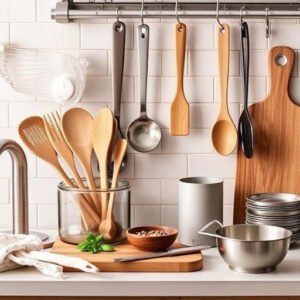
A functional kitchen doesn’t require dozens of gadgets—it requires the right utensils that make cooking smoother, safer, and more enjoyable. Whether you’re a beginner learning basic recipes or a home chef experimenting with flavors, having reliable tools can dramatically improve your results.
This detailed guide walks you through the must-have kitchen utensils, explaining not just what they are—but why they matter, how to use them, and what to look for when buying them.
1. Chef’s Knife – Your All-in-One Cutting Tool
A chef’s knife is the most important utensil in your kitchen. Typically 6–10 inches long, it’s designed for versatility and precision.
What it’s used for:
- Chopping vegetables like onions, tomatoes, and spinach
- Slicing meat and fish
- Mincing garlic and herbs
Why it’s essential:
Instead of using multiple knives, a chef’s knife handles nearly every cutting task efficiently. A sharp knife also reduces the risk of injury because it requires less force.
What to look for:
- Comfortable grip
- Balanced weight
- Stainless steel blade for durability
2. Cutting Board – A Safe Prep Surface
A cutting board protects your countertops and provides a stable surface for food preparation.
Types:
- Wooden boards: Durable and gentle on knives
- Plastic boards: Easy to clean and more hygienic for raw meat
Why it matters:
Using a cutting board prevents contamination and keeps your kitchen organized during prep.
Pro tip:
Keep separate boards for vegetables and meat to maintain hygiene.
3. Measuring Cups & Spoons – Precision in Cooking
Cooking is an art, but baking is a science—and both require accurate measurements.
What they’re used for:
- Measuring flour, sugar, spices, and liquids
- Maintaining consistency in recipes
Why essential:
Even small measurement mistakes can change the taste or texture of a dish.
Tip:
Use separate sets for dry and liquid ingredients for best accuracy.
4. Spatula – The Multi-Tasking Tool
A spatula is incredibly versatile and comes in different forms.
Types and uses:
- Flat spatula: Flipping pancakes, eggs, burgers
- Silicone spatula: Scraping bowls, mixing batters
Why it’s important:
It helps handle delicate foods without breaking them and prevents scratching non-stick cookware.
5. Wooden Spoon – A Traditional Favorite
A wooden spoon is a simple yet powerful tool for stirring and mixing. Wooden spoons can be a best for custom gift boxes as they can be a perfect fit along with cutting boards or other olive wood products.
Best for:
- Soups, curries, sauces, and gravies
- Long cooking processes
Why choose wood:
- Doesn’t conduct heat (safe to hold)
- Won’t scratch pots and pans
- Doesn’t react with acidic foods
6. Whisk – For Smooth Mixing
A whisk is designed to blend ingredients and incorporate air.
Common uses:
- Beating eggs
- Mixing cake batter
- Preparing sauces like custard or gravy
Why it matters:
It creates smooth, lump-free mixtures and improves texture.
7. Tongs – Better Control While Cooking
Tongs act like an extension of your hands, giving you better grip and safety.
Ideal for:
- Flipping meat while frying
- Handling hot foods
- Tossing salads
Why essential:
Keeps your hands away from heat and oil splashes.
8. Ladle – Perfect for Liquids
A ladle has a deep bowl and long handle, making it perfect for serving liquids.
Best used for:
- Soups
- Daal and curries
- Sauces
Why it’s useful:
It allows controlled pouring without spills.
9. Peeler – Speed Up Your Prep Work
A peeler makes removing skins from fruits and vegetables quick and easy.
Uses:
- Potatoes, carrots, cucumbers
- Apples and other fruits
Why it’s important:
Saves time and reduces waste compared to using a knife.
10. Colander (Strainer) – Drain with Ease
A colander is used to drain liquids from food.
Common uses:
- Draining pasta
- Washing fruits and vegetables
- Rinsing rice
Why it matters:
It simplifies kitchen tasks and improves efficiency.
11. Kitchen Scissors – The Underrated Tool
Kitchen scissors are more useful than many people realize.
What you can do with them:
- Cut herbs quickly
- Open food packaging
- Trim fat from meat
Why keep them handy:
They’re faster and more precise for certain tasks than knives.
12. Mixing Bowls – Essential for Preparation
Mixing bowls are used for combining ingredients before cooking.
Why they’re important:
- Keep your prep organized
- Prevent mess in the kitchen
Best options:
- Stainless steel (durable)
- Glass (microwave-safe)
13. Grater – For Fresh Flavor and Texture
A grater is a simple tool that delivers big results when it comes to flavor.
Common uses:
- Grating cheese for pasta or pizza
- Shredding vegetables like carrots and cabbage
- Zesting lemons and oranges
Why it’s worth having:
Freshly grated ingredients taste better than pre-packaged ones and can elevate even simple dishes.
14. Rolling Pin – For Dough Preparation
If you enjoy baking or making homemade flatbreads like roti or naan, a rolling pin is essential.
What it does:
- Flattens dough evenly
- Helps control thickness for consistent cooking
Types:
- Wooden rolling pins (traditional and sturdy)
- Marble rolling pins (heavier and smoother)
15. Food Thermometer – Precision Cooking
A food thermometer takes the guesswork out of cooking, especially for meat.
Why it matters:
- Ensures food is cooked safely
- Prevents overcooking or undercooking
Best for:
- Chicken, beef, and baked dishes
Final Wrap-Up
A thoughtfully equipped kitchen doesn’t have to be expensive or complicated. By investing in essential utensils and adding a few smart extras, you create a space that supports your cooking journey.
From chopping and mixing to cooking and serving, each utensil plays a role in making your time in the kitchen more efficient and enjoyable. With these tools at your disposal, you’ll not only cook better meals—you’ll also enjoy the process much more.