

Most people do not think about how crucial the storage can be when it comes to the ingredients they have. They think about it when it’s time to store their belongings, equipment, and other things, but it’s like ingredients don’t matter at all.
And then, one day, they decide to open their cupboard, only to find out that things like flour, sugar, and many others are spoiled, and that’s all because they didn’t take care of them properly.
What could have saved it was the right storage, a place that’s cool and dark enough. If you didn’t think about this topic before, then maybe this informative guide is going to encourage you do it now.
What Negatively Impacts The Food?
Before we further explore the advantages of dark and cool spaces as far as food is concerned, let’s first better understand what causes food spoilage. There are numerous elements that contribute to this, and the ones that are most common include the following:
- Oxygen that results in oxidation
- Heat accelerates chemical reactions
- Moisture that causes bacteria and mold
- Light breaks down nutrients and fats
When all of these factors join forces, food deterioration becomes practically inevitable. In contrast, dark and cool places radically reduce this.
What’s The Situation With The Cooler Places?
Temperature is the one that determines how fast chemical reactions happen. The warmer the place is, the faster food experiences certain changes. That’s because heat causes flavors to lose their power, oils to go rancid, and many other negative things.
On the other hand, when food and beverages are stored in colder places, all of these are drastically slowed down. And that’s one of the biggest reasons why so many avid wine lovers put their bottles to wine store, because they want to store fine wines properly, and, at the same time, “extend their life”. And that’s what you should do with anything else that’s susceptible to spoilage.
These rules, in terms of cooler places, can be applied to other food items, like dry goods, canned foods, grains, etc. Even if you lower the storage temperature just a bit, you’ll still make a drastic, positive change.
That’s probably why so many homeowners (who care about food preservation) opt for pantries and basements that aren’t too close to appliances.
What About Darkness?
Light, in general, particularly sunlight, results in a process that’s known as photodegradation. So, what does it mean? During the process, light breaks apart all the molecules that are in food. When something like this occurs, it completely destroys various vitamins, gradually alters the flavor (in a bad way), and breaks down oils and fats.
Have you noticed how, for instance, things like olive oil are always sold in darker bottles? This isn’t a coincidence. They want to preserve its flavor and the overall quality for as long as they can.
On the flip side, beer that’s in the clearer bottles usually doesn’t last as long, especially in comparison to those that are in darker bottles. The bottom line is that darkness is here to protect all the ingredients, keeping them fresh and strong.
Conventional Storage Methods Have Always Resorted To Cool And Dark Places
Before electricity was introduced to the world, people were still capable of successfully storing their food for a very long time. In these instances, they were employing underground areas to store grain, root cellars for veggies, shaded rooms for clay pots, and salted meats were placed in cooler areas.
The truth is that back in the day, they were familiar with oxidation and enzymes; however, what they did know is that the sunlight is going to ultimately destroy their food. And that’s what modern preservation understands, as well!
Ingredients That Love Dark And Cool Places
The truth is that the vast majority of food items will be impacted by the cool and dark places (in a good way, of course), but there are those that are a bit more “fond” of them than others. This refers to:
- Flours and grains will definitely be fresher if they are held in cooler areas
- Canned food retains its nutritional quality much longer when it’s stored in cool places
- Nut oils and cooking oils do not experience rancidity when they are in the dark
- Even shelf-stable food items could benefit from these places
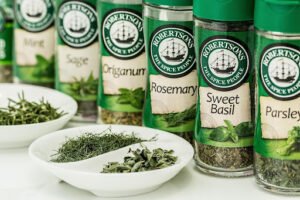
- Spices and dried herbs retain their flavor for a very long time when they steer clear of the light
- Baking and sugar ingredients keep moisture at bay because of them
- Nuts and seeds keep their nutrients and natural oils
Let’s Talk About The Microorganisms And Enzymes
Basically, every food has enzymes that at some point change their flavor, texture, and structure. When it comes to microorganisms, they are able to grow in the right conditions. What’s worth mentioning is the fact that the heat is the one that encourages microbial growth and enzyme activity.
In contrast, cooler temperatures do the total opposite. Although in these circumstances, one of the best things that you can do is to put your food in the fridge. Bear in mind that cool storage is also a great alternative.
You’ll Better Control Moisture When Your Ingredients Are Stored In Cool Areas
Warm air holds a lot more moisture, and as soon as it cools down, it results in condensation. This moisture stimulates:
- Spoilage
- Mold
- Bacterial growth
Cool temperatures are a lot better at controlling humidity, particularly when it joins forces with the airtight containers. That’s probably one of the main reasons why basements that come with dehumidifiers are a fantastic solution for those who want to store their food, and simultaneously, preserve it for a very long time.
Consistency Matters, Too!
It’s much better to store your food in a place that has a steady, cool temperature than in a place where the temperature is constantly different.
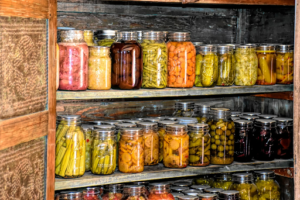
As you can see, you can only benefit from the cool and dark storage, because they are the ones that slow down anything that negatively affects your food and drinks. That’s why we honestly hope you’ll keep storing them in these areas.