

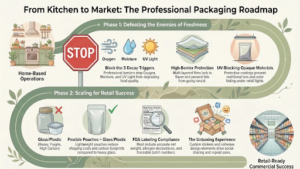
Turning your family’s favorite recipe into a commercial success requires more than just great taste. The transition from a home kitchen to a retail environment involves mastering shelf life and product presentation.
According to university experts at Penn State Extension, scaling up successfully demands understanding commercial processing and packaging technologies. Without the right strategy, even the best artisan foods will lose their flavor and appeal before reaching the customer.
Preservation and presentation are the two pillars of a successful small-batch food business. Upgrading your operations early ensures your products remain safe, compliant, and visually appealing.
Why Professional Packaging is Your First Crucial Step
When transitioning from giving food to friends to selling it online, amateur containers simply won’t suffice. The longevity of your product relies heavily on the material’s barrier properties against oxygen and moisture transmission.
For instance, industry-grade Bsflexpack—such as the multi-layered barrier pouches developed by manufacturers like BS Flexpack—are specifically engineered to lock in freshness while significantly extending the retail shelf life of artisan goods.
Investing in commercial-grade packaging minimizes the risk of spoilage and product returns. It forms a critical protective shield that maintains the exact texture and flavor profile you intended.
The Science of Food Preservation: The 3 Enemies of Freshness
Controlling Moisture and Oxygen
Oxygen and humidity are the fastest triggers for food degradation and bacterial growth. High Oxygen Transmission Rates (OTR) can cause fats to go rancid and dry goods to become stale rapidly.
Moisture ingress leads to clumping in spices and mold proliferation in baked goods. Implementing high-barrier films helps maintain the ideal internal microclimate for your specific food product.
UV Light Protection
Ultraviolet light accelerates the photo-oxidation of fats, oils, and vitamins. This exposure degrades the nutritional value and causes noticeable color fading in your artisan products.
Using opaque materials or applying UV-blocking coatings is essential for foods displayed under harsh retail lighting. Proper light protection guarantees your product looks as vibrant as the day it was made.
Evaluating Common Food Packaging Materials
Glass Jars vs. Rigid Plastics
Traditional glass jars offer excellent barriers and a premium, vintage look. However, they are fragile, heavy, and significantly inflate your shipping and handling costs.
Rigid plastics are lighter and less prone to breaking, making them a common alternative. Unfortunately, many standard plastics offer lower barrier properties and take up excessive warehouse space.
The Efficiency of Flexible Pouches
Flexible pouches, like stand-up or flat-bottom bags, have become the gold standard for modern small food brands due to several distinct advantages:
- Lightweight profiles that greatly reduce shipping costs and carbon footprints.
- Multi-layered barrier films that reliably block moisture, oxygen, and light.
- Space-saving designs that simplify kitchen organization for home-based startups.
Navigating Food Safety and Labeling Standards
Beyond preserving the quality of your food, your packaging serves as a legal communication tool with your customers. Transparency is non-negotiable.
Before finalizing your pouch design, you must ensure that your ingredient lists and allergen warnings strictly adhere to the FDA’s food labeling guidelines to prevent legal complications and build consumer trust.
To maintain full compliance and professionalism, ensure your commercial packaging clearly lists:
- Accurate net weight and comprehensive ingredient lists.
- Prominent allergen declarations (e.g., nuts, dairy, wheat).
- Traceable batch numbers and clear expiration dates.
Creating a Memorable Unboxing Experience
First impressions matter when selling artisan foods online or at boutique markets. Your packaging is often the first physical interaction a customer has with your brand.
Using custom brand stickers, eco-friendly void fill, and cohesive design elements elevates the perceived value. A premium unboxing experience encourages social media sharing and repeat purchases.
Key Takeaways
| Area | Key Takeaway | Impact/Data |
| Spoilage Control | Block oxygen, moisture, and UV light | Prevents rancidity and mold |
| Packaging Shift | Adopt multi-layered flexible barrier pouches | Drastically reduces shipping costs |
| FDA Compliance | Print allergens, batch, and expiration data | Avoids legal trouble |
| Brand Experience | Design premium, cohesive unboxing elements | Triggers social media sharing |
Final Thoughts on Scaling Your Kitchen Business
Transforming your culinary passion into a profitable business starts with the right foundation. Protecting your product through advanced preserving food techniques and appropriate materials is critical.
By upgrading to professional, high-barrier packaging, you protect your brand’s reputation and your food’s quality. Start small, focus on these essential details, and watch your small-batch food empire grow.