

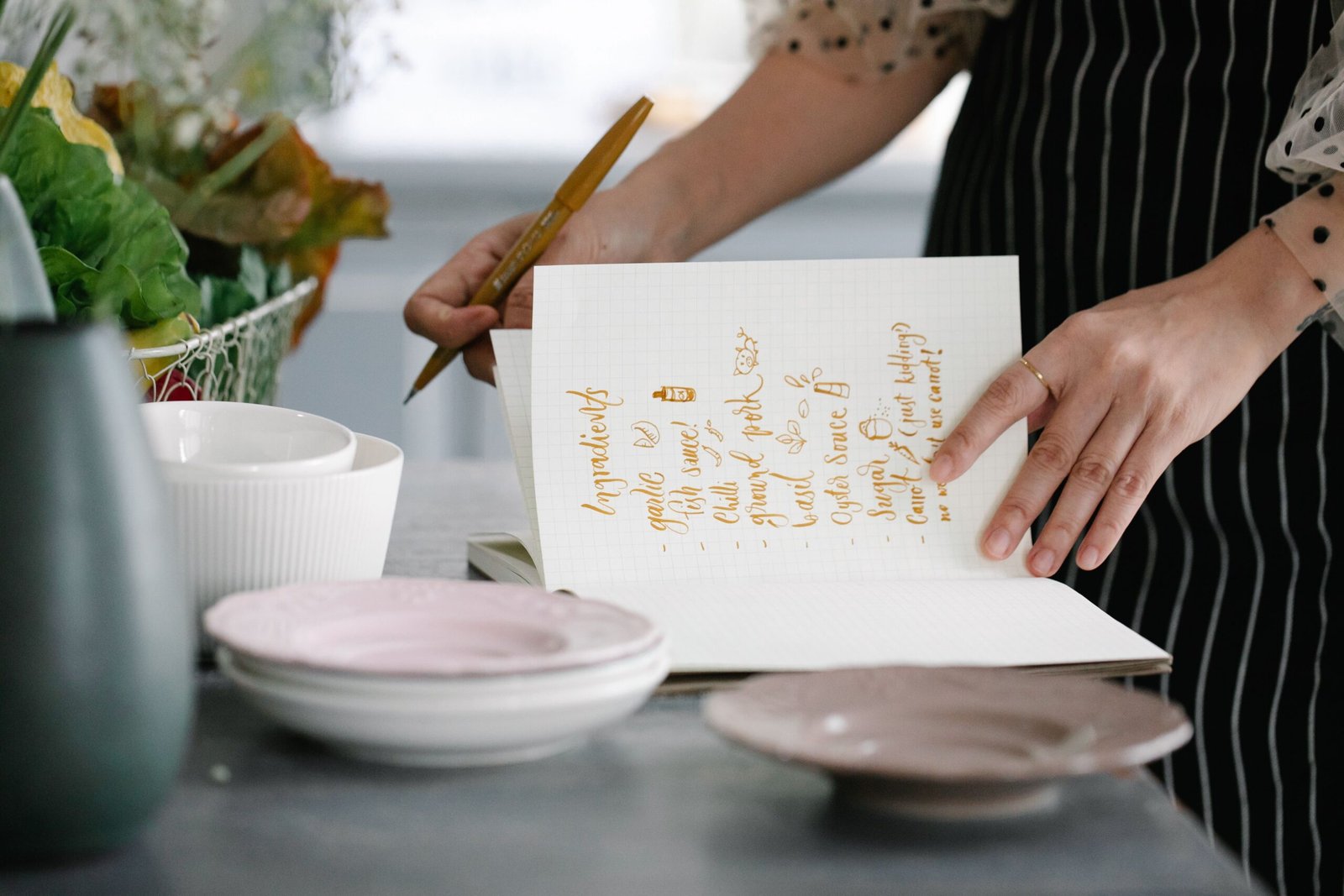
A family recipe is rarely just a list of ingredients. It may carry a memory of a grandparent’s kitchen, a local harvest or a dish made for a particular celebration. If you’re gathering recipes to share online, stock photography can help fill gaps in your pictures—but your own photographs and family details are what make the collection feel personal.
What Stock Photos Can—and Can’t—Do
Stock images are photographs or illustrations licensed for use by others. They can be useful when you need a picture of an ingredient, a cooking technique or a seasonal setting but don’t have a suitable image of your own. A photograph of a loaf cooling on a rack, for instance, can make a page look inviting while you work on taking pictures of the family’s actual bread recipe.
There is a trade-off, though. A generic image cannot show the chipped bowl your aunt always used or the way your family serves a particular dish. Nor can it prove how a recipe should look when you finish it. For those details, take your own pictures, even if they’re simple. A phone, good daylight and a clear work surface are enough to record the process and the result.
Use stock sparingly and label your images accurately. Don’t present a stock photograph as though it shows your recipe, your family or a particular place. If you have several recipes from one region or household, original images will help readers recognise the collection as yours.
Gather the Story Before You Start Designing
Before choosing a layout, speak to the people who know the recipes. Ask what a dish was called at home, when it was usually served and whether any ingredients or steps have changed over time. A relative may remember that a pie was made after market day, or that its filling depended on what the garden produced. Those small observations are valuable context, not clutter.
Write down measurements as carefully as you can, but mark estimates as estimates. Older cooks often measured by eye, and translating that habit into cups, grams or oven temperatures can take a few attempts. Test the recipe yourself and note what you changed. Keeping the original wording alongside a tested version can preserve a relative’s voice while making the method easier for a new cook to follow.
It’s also worth recording who shared each recipe and when. Family histories can be complicated, and not every story needs to be made public. Check with relatives before publishing personal photographs or sensitive details. A private archive can be just as meaningful as a public one.
Choose Images That Support the Recipe
Photographs should help someone cook, not simply decorate the page. Take a picture of an unfamiliar ingredient, a useful stage such as dough after kneading, and the finished dish. Keep the background uncluttered and use natural light where possible. If you take pictures during cooking, wipe the lens first and make sure the food is in focus.
When you do use stock, look for images that fit the recipe’s actual ingredients and setting. A photograph of a polished restaurant plate may not suit a modest family supper, while an image of the wrong kind of grain could confuse a reader. Check the image’s permitted uses and keep a record of its source and licence. Rights vary, so an image found online is not automatically free to reuse.
Keep the Design Simple
A recipe archive doesn’t need elaborate graphics. Readers should be able to find the ingredients, follow the steps and return to the family story without struggling with the page. Choose readable type, strong contrast and a consistent format for measurements and headings. Test the design on a phone as well as a computer, since many people cook with a screen nearby.
Design software changes over time, and it helps to understand what a tool is good at before building a whole archive around it. The Figma–Adobe story is a useful example of how the design-tool landscape can shift even when a proposed deal does not go ahead. For a small project, the practical questions matter most: can you make consistent pages, collaborate with family members and export files in formats you can keep?
Give Your Collection a Home
A folder of documents is a fine place to begin, but a website can make recipes easier to browse and share. Think about the structure before you choose a design. Recipes might be grouped by meal, ingredient, season or branch of the family. Add a search function if the collection grows, and keep a separate backup of the text and photographs so the archive isn’t tied to one platform.
Building a business website can take more or less time depending on its size, content and features. Osdire’s guide to how long a website takes to build is a helpful reminder to allow time for planning and gathering material, not only for the design itself. A recipe site also needs careful testing: check that measurements display correctly, images load, and pages are easy to read on smaller screens.
Start with a handful of recipes and improve the archive as you learn what readers need. A clear method, a true family detail and a well-chosen photograph will do more for a recipe than a page crowded with decoration. Stock images can fill an occasional gap, but the memories and cooking knowledge you record are the part no image library can supply.