

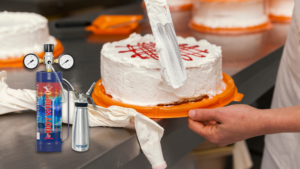
Whipped cream looks like one of those “easy wins” in the kitchen. Pour, whip, done. But if you’ve ever ended up with a bowl of grainy foam, soup that won’t hold, or cream that collapses the second it hits a warm dessert, you already know the truth: whipped cream is simple, but it’s not forgiving.
I’ve seen home cooks beat it too far, not far enough, or give up halfway and blame the cream. The problem usually isn’t the ingredients — it’s what happens to the air inside the cream.
The Problems You’ve Probably Run Into
You start whipping and things look fine… for about thirty seconds. Then it goes wrong.
Sometimes the texture is off — stiff in one spot, loose in another. Sometimes it looks perfect in the bowl but melts into nothing the moment you spoon it onto a cake. And then there’s the worst one: that slightly gritty, buttery mouthfeel that tells you the cream is on its way to splitting.
This usually happens during real-life moments: a warm kitchen, guests waiting, a mixer running a little too long because you’re distracted. Whipped cream doesn’t give you much margin for error.
Why Whipped Cream Fails So Easily?
At its core, whipped cream is about controlling three things: temperature, time, and how air gets into the cream.
Cream that’s too warm won’t trap air properly. Whip too fast or too long and the fat starts clumping instead of supporting the foam. Whip too gently and the bubbles stay large and unstable.
Hand-whipping and electric mixers both have the same issue: they introduce air in an uneven, uncontrolled way. Some bubbles are big, some small, some collapse faster than others. That’s why you can follow the same method twice and get completely different results — a very normal home kitchen problem.
Home Kitchen vs. Professional Kitchen
In professional kitchens, consistency isn’t luck — it’s designed. Chefs don’t rely on “watch it closely and hope for the best.” They control how air or gas enters the cream, not just how fast it’s whipped.
That’s the quiet difference most people don’t notice. It’s not better than cream or secret ingredients. It’s controlled aeration.
The Principle Behind Whipping Cream
Whipped cream is a network of tiny air bubbles held in place by milk fat. The size and distribution of those bubbles decide everything: texture, stability, and mouthfeel.
Large, uneven bubbles make cream feel light at first but collapse quickly. Small, evenly distributed bubbles create a structure that’s smooth, stable, and creamy without being heavy.
This is where controlled gas infusion changes the game. When you can regulate how gas enters the cream — instead of forcing air in randomly — you get a much more stable foam. That’s the principle behind using a cream charger tank.
Advantages of Using a Whipped Cream Charger
Using a cream charger isn’t about shortcuts — it’s about removing variables.
- Consistency: The gas is injected evenly, which means fewer failed batches and predictable results.
- Efficiency: No overwhipping, no starting over, less wasted cream.
- Versatility: Beyond whipped cream, the same approach works for sauces, dessert foams, and even coffee toppings.
You’re not fighting temperature, timing, and technique all at once. The tool does part of the control for you.
What Good Whipped Cream Should Be Like
Great whipped cream feels light but not empty. It holds its shape but still melts cleanly on the tongue. It shouldn’t feel stiff, greasy, or fragile.
A cream charger tank helps eliminate the most unpredictable part of the process — how air is introduced — without requiring professional-level skills. The result is whipped cream that’s reliable, smooth, and stable, even in less-than-perfect kitchen conditions.
In the end, good whipped cream isn’t about whipping harder or faster. It’s about control. Once you understand that, everything else starts to make sense.