

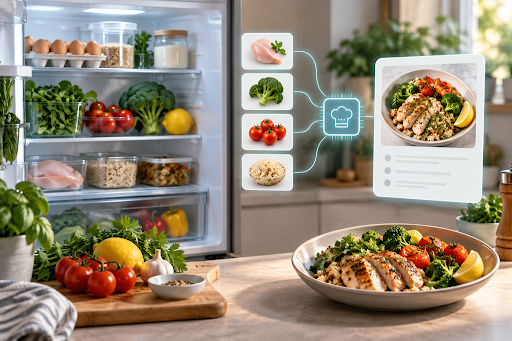
An AI recipe maker turns ingredients you already have into practical meal ideas, helping you decide what to cook without starting with a fixed recipe. Instead of searching for a dish and then buying every required ingredient, you can enter what is already in your fridge, freezer, or pantry and generate recipes around those foods.
You can also add details such as cooking time, number of servings, dietary preferences, available appliances, or ingredients that need to be used soon. This makes ingredient-based recipe creation useful for busy households, meal planning, and reducing unnecessary food waste.
In simple terms, you start with what you have and let AI help turn it into something worth cooking.
How Does an AI Recipe Maker Turn Ingredients Into Recipes?
An AI recipe maker works by using the information you provide to create a meal that fits your available ingredients and cooking needs.
Unlike traditional recipe search, you do not necessarily need to know what dish you want before you begin. You can start with a handful of ingredients and let the system suggest suitable combinations.
For example, you might have chicken, broccoli, cooked rice, garlic, and a lemon. Instead of searching separately for recipes containing all five ingredients, you can enter them together and request a dinner for two that takes less than 30 minutes.
The more context you provide, the more relevant the result can become. For a more organized approach, ai recipes can connect your available ingredients with practical meal ideas and help prioritize foods that should be used soon
How an AI Recipe Maker Understands Your Ingredients
A useful recipe request usually starts with the foods already available in your kitchen.
You can then add instructions that shape the recipe.
For example:
“Use chicken, cooked rice, broccoli, garlic, and lemon. Make dinner for two in under 30 minutes and avoid dairy.”
That request provides far more direction than simply asking for a chicken recipe.
AI can use those constraints to narrow down the possibilities and create something that better matches your actual kitchen.
From Ingredients to a Complete Recipe
A recipe generator from ingredients can transform a list of available foods into a more structured cooking plan.
Depending on the tool and the information provided, the result may include:
- A recipe title
- Ingredient quantities
- Preparation instructions
- Step-by-step cooking directions
- Estimated preparation and cooking time
- Serving size
- Possible substitutions
- Optional ingredients or toppings
The goal is not simply to combine every food you enter. A useful recipe should also consider whether those ingredients complement one another, which cooking methods make sense, and how the steps should be ordered.
You may also be able to ask for several alternatives instead of one answer. This can be helpful when the same ingredients could become a soup, grain bowl, pasta dish, stir-fry, or salad.
Can an AI Recipe Maker Help Reduce Food Waste?
Yes. An AI recipe maker can help reduce food waste by making it easier to build meals around ingredients that might otherwise go unused.
Fresh produce, leftover rice, herbs, opened dairy products, sauces, and small quantities of ingredients are particularly easy to forget. If you enter those foods before they are discarded, AI can suggest ways to combine them with pantry basics.
A practical routine could include:
- Check the fridge before shopping
- Identify ingredients that should be used soon
- Add pantry staples you already own
- Generate several possible meals
- Choose the recipe that uses priority ingredients
- Buy only the additional items that are genuinely needed
AI cannot prevent food waste on its own. However, it can help overcome one of the most common problems: not knowing what to make with ingredients already on hand.

How to Get Better Results From an AI Cooking Assistant
The usefulness of an AI-generated recipe often depends on the quality of the information you provide.
A basic list of ingredients can produce ideas. A detailed request can produce ideas that are much more closely matched to your situation.
Give the AI More Than a Basic Ingredient List
When possible, include information such as:
- Ingredients you want to use
- Foods you want to avoid
- Number of servings
- Maximum cooking time
- Dietary preferences
- Allergies or intolerances
- Preferred cuisine
- Available kitchen appliances
- Cooking skill level
- Desired meal type
- Nutrition goals
- Ingredients that should be used first
Consider the difference between these two prompts:
“Make something with chicken and rice.”
And:
“Create a dinner for two using chicken, cooked rice, broccoli, garlic, and lemon. Keep it under 30 minutes, use one pan if possible, and avoid dairy.”
The second version gives the system meaningful boundaries.
That usually makes it easier to generate something practical rather than a generic recipe that requires several additional ingredients.
What Is the Best AI Recipe Maker for Personalized Meal Ideas?
The best AI recipe maker for personalized meal ideas depends on what you need it to do.
Someone trying to reduce food waste may prioritize fridge and ingredient tracking. A busy parent may care more about quick meal generation and serving adjustments. Someone following a specific diet may prioritize detailed preference and restriction controls.
Rather than looking only at how many recipes a tool can produce, consider how effectively it adapts to your situation.
Features That Make an AI Recipe Maker More Useful
Useful features may include:
- Ingredient-based recipe generation
- Dietary preference options
- Allergy and restriction inputs
- Serving-size adjustments
- Ingredient substitutions
- Preparation-time filters
- Pantry or fridge awareness
- Step-by-step instructions
- Meal-planning support
- Shopping-list features
- Easy recipe refinement
Flexibility matters because meal planning rarely happens under identical conditions every day.
One night you may need dinner in 20 minutes. Another day, you may want to use several ingredients before they expire. On the weekend, you may have more time and want to try something more involved.
A useful tool should be able to adapt to those changes.
Turn the Ingredients You Have Into a Practical Meal
You do not always need another grocery trip or a perfectly planned ingredient list to make a satisfying meal.
Ingredient-based AI can help turn vegetables, leftovers, pantry staples, proteins, and personal preferences into practical ideas when you are unsure what to cook. The key is to provide clear information, refine the recipe when necessary, and review the instructions before cooking.
Used thoughtfully, an AI recipe maker can make everyday meal decisions faster, support more personalized cooking, and help you make better use of the ingredients already waiting in your kitchen.