

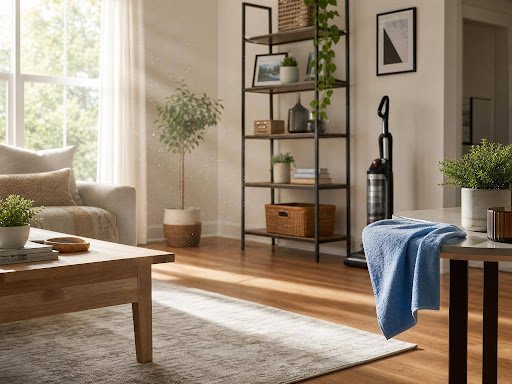
Household cleaning tends to get judged on appearance alone, but a well-structured routine accomplishes more than just making a home look presentable. Done consistently, it helps slow the gradual buildup of dust, pet dander, pollen, and other everyday particles that settle onto floors and surfaces over time. A good routine weighs cleanliness against available time, surface type, and the particular needs of the people living in the home. Tools such as a robot vacuum can help keep floor cleaning on a steady schedule, but no single device substitutes for targeted attention to fabrics, high-touch areas, or those awkward corners that are easy to overlook. Automated floor cleaning doesn’t prevent illness or guarantee better health outcomes—it simply supports one piece of a larger cleaning strategy.
Key principle: A sustainable, consistent routine generally beats occasional marathon cleaning sessions. Small, repeated efforts tend to stop dust and debris from piling up in the first place.
Understanding What Cleaning Can and Cannot Do
Cleaning, sanitizing, and disinfecting aren’t interchangeable—they describe distinct processes. Cleaning removes dirt, dust, debris, and some germs from surfaces. Sanitizing brings microorganisms down to a generally acceptable level, while disinfecting relies on a product or method designed to destroy many harmful microorganisms on a suitable surface. Cleaning usually comes first on visibly soiled surfaces, since dirt and organic material can interfere with how well a disinfectant actually works. According to the Centers for Disease Control and Prevention, routine disinfection throughout an entire home isn’t always necessary. It becomes more relevant when someone in the household is sick or when conditions create elevated risk. Always check the product label for surface compatibility, ventilation needs, and required contact time.
Using more cleaning products than necessary won’t improve results, and it can increase chemical exposure or damage surfaces. Never mix cleaning chemicals, particularly bleach with other cleaners, since doing so can trigger hazardous reactions. Ventilate rooms when using strong products, and keep in mind that household cleaners are never a substitute for medical treatment.
Identify the Main Sources of Dust and Indoor Debris
Dust and debris arrive from all directions: soil tracked in from outside, pollen, skin flakes, pet hair and dander, fibers shed from clothing and textiles, and the inevitable food crumbs. These particles tend to collect along baseboards, under furniture, on shelves, blinds, and vents—spots where airflow is minimal. Ventilation, pets, flooring type, and proximity to outdoor pollutants all influence how quickly debris builds up, and no routine, however thorough, eliminates dust completely.
Picture three different households: one with pets and mostly hard flooring, where hair and tracked-in debris are the main headache; a carpeted home with young children, where crumbs and spills show up constantly; and a small apartment where entryway dirt is the biggest culprit. Each situation calls for a different balance of daily and weekly attention, which is exactly why a single fixed schedule rarely fits every home. Households dealing with allergies or respiratory sensitivities may benefit from more consistent upkeep, though cleaning alone shouldn’t be treated as a medical intervention.
Build a Cleaning Schedule Around Frequency and Priority
A workable schedule works better when organized by frequency rather than treated as a rigid checklist:
- Daily or near-daily: wipe up visible crumbs and spills, clean kitchen prep surfaces after use, manage entryway dirt with mats and footwear habits, and handle pet debris where it tends to collect.
- Weekly: vacuum or clean floors based on flooring type and traffic, dust surfaces using a method that captures rather than scatters particles, clean bathrooms and kitchens with appropriate products, and wash frequently used textiles.
- Periodic: clean vents, blinds, baseboards, light fixtures, and upholstery; inspect and replace filters according to manufacturer instructions; and reassess whether the schedule still matches what you’re actually seeing accumulate.
These frequencies are starting points rather than fixed rules, and they can be adjusted as household conditions shift.
Use Methods That Minimize Dust Redistribution
Damp microfiber cloths, damp mopping, and dusting tools designed to trap particles generally outperform dry sweeping or vigorous dusting, both of which can temporarily send settled dust right back into the air. Working from higher surfaces downward gives loosened particles time to settle before floors get cleaned last. Avoid shaking dusty textiles indoors. In allergy-sensitive households, vacuuming can briefly stir up airborne particles, so decent filtration and ventilation help. Equipment performance ultimately comes down to proper maintenance, filter condition, and correct use rather than any single standout feature.
Choose Cleaning Tools Based on the Task
Rather than fixating on brand names, it helps to think in terms of function: floor tools for loose debris, damp cloths for settled dust, brushes or crevice tools for edges, appropriate cleaners for kitchens and bathrooms, and washable or replaceable filters. Selection should take into account flooring type, household size, pets, storage space, noise tolerance, and how easily a tool can reach under furniture or into corners. Automated tools can take some of the routine floor maintenance off your plate, but they don’t replace manual cleaning of stairs, upholstery, shelves, or high-touch surfaces. Always check manufacturer guidance before adding water, detergents, or attachments to any device.
Clean According to Household Needs
Routines should flex around pets, children, mobility limitations, frequent visitors, recent illness, or renovation dust. Visible dirt, odor, spills, and traffic patterns are practical indicators of where attention belongs. During illness, it’s worth distinguishing high-touch surfaces—door handles, light switches, shared remotes—from lower-touch areas that can wait longer between cleanings. People with diagnosed respiratory or allergy conditions should follow guidance from their healthcare provider rather than relying solely on cleaning adjustments.
Common Mistakes That Make Cleaning Less Effective
Frequent issues include disinfecting before removing visible soil, using an unsuitable product on a delicate surface, ignoring ventilation or contact time, dusting after the floors are already done, and neglecting filters or mop heads. Treating a schedule as set in stone, even as household conditions change, also undercuts effectiveness—as does making unsupported claims like “germ-free” or “allergen-proof.”
Quick safety check: Read the label. Never mix disinfectants. Keep cleaning products away from children and pets.
Practical One-Week Routine Example
A simple structure might include a short daily reset of floors and kitchen surfaces, one weekly session devoted to dusting and floor cleaning, and one rotating periodic task such as baseboards or upholstery. Splitting tasks among household members lightens the load, and starting with whatever area shows the most visible debris helps keep expectations realistic.
A Sustainable Approach to a Cleaner Home
Routine maintenance, matched to surface type and debris, tends to outperform occasional deep cleaning. Damp dusting, appropriate floor care, and saving disinfection for situations that actually call for it all add up to a more manageable system. Take note of where dust gathers most in your home, then give those spots a realistic place in your weekly routine—adjusting as needed along the way.