
Home Blog Page 58

Strawberry Shortcake with Mint, Honey & Whipped Cream

Today I will share with you my recipe for strawberry shortcake made solely from whole foods and fresh ingredients. I can proudly say that it is the best strawberry shortcake I have eaten, mostly because I enjoy the flavors without second-guessing what preservatives and chemicals I might be ingesting. In this recipe, the answer is simple: none!

Homemade buttermilk biscuits sweetened with a dash of whole cane sugar are just mouth-watering on their own. Combine that with fresh organic strawberries, mint, honey, and velvety whipped cream and you will get the absolute strawberry shortcake. Perfect for everybody and at any time of the day! Once you try this one, you will never go back to store-bought cake mixes and artificial strawberry pie fillings. This is what people are meant to eat, not those factory-made chemical-laden pseudo ingredients.

Necessary equipment:

  • measuring cup
  • large mixing bowl
  • pastry blender OR a food processor
  • wooden spoon
  • dish towel
  • optional: a large dehydrator
  • ice cream scoop
  • jelly roll pan
  • parchment paper
  • rolling pin
  • two small mixing bowl
  • small strainer
  • rubber scraper
  • medium mixing bowl
  • small spatula
  • stand mixer with a whisk attachment
  • biscuit cutter OR a pizza cutter
  • cake pan

Ingredients:

  • 2 1/2 cup of freshly ground flour (how to make sprouted flour)
  • 1 cup of buttermilk (how to make buttermilk)
  • 3/4 stick of cool butter (about 6 tablespoons) (how to make butter)
  • 1 cup of raw honey
  • 2 T. of whole cane sugar
  • 2 t. of baking powder
  • 1/2 t. of baking soda
  • 1 t. of sea salt
  • several sprigs of fresh mint
  • 1 cup of heavy cream
  • 1 pound of organic strawberries

Instructions:

The biscuits:

  1. Combine flour and butter in a large mixing bowl using a pastry blender or a food processor.
  2. Add in the buttermilk and combine by stirring with a wooden spoon.
  3. Cover with a dish towel and leave to rest at warm temperature (like the oven with the light turned on or a warm pantry) overnight or at least 12 hours. You can also use a dehydrator for this.
  4. Once 12 hours have passed, preheat the oven to 425 degrees.
  5. Uncover the bowl and add in the whole cane sugar, baking powder, baking soda, and sea salt. Combine with a wooden spoon.
  6. Line a jelly roll pan with parchment paper.
  7. Use an ice cream scoop to form round biscuits from your buttermilk dough on the baking sheet. You don’t need to leave a lot of space in between because they won’t grow too much.
  8. Bake for 12 to 14 minutes. The biscuit should be nicely browned by now.
  9. Take out of the oven and leave to cool.

Mint-infused honey:

  1. Put the mint sprigs and honey in a small bowl.
  2. Use a potato masher or a similar tool to smash the mint so that it releases mint oil into the honey.
  3. Leave covered with a dish towel for one hour.
  4. Set a strainer over another bowl and use a rubber scraper to press the honey over the strainer. You will receive mint-infused honey.

Strawberry filling:

  1. Dice the strawberries.
  2. Combine them in a medium mixing bowl with 3/4 of the mint-infused honey.
  3. Stir to combine and leave to rest while you make whipped cream.

Whipped cream:

  1. Whip the cream using a stand mixer with the whisk attachments. Continue whipping until you see soft peaks forming.
  2. Combine the cream with the rest of the mint-infused honey.
  3. Cut the buttermilk biscuits into half and layer on the bottom of your cake pan.
  4. Pour the strawberry filling onto the biscuits in an even layer.
  5. Put the whipped cream on top of the strawberry layer.
  6. Chill in the fridge for a few hours so that cake sets properly and all the flavors combine.
  7. Serve with fresh mint on top. Enjoy!
How to Make Homemade Water Kefir

I am sure that by now you know fully well how big of a fan I am of lacto-fermented foods. I admit I have been going crazy over them during the past year. But I do not regret it one bit. These foods make me feel better so I will continue eating them.

Water Kefir

In this post, I want to introduce you to my recipe for water kefir. I almost always have a batch fermenting in my kitchen, available to drink first thing in the morning. It tastes great as it is but it can also be customized to give your kefir a unique flavor of your own. I have tried many of them over the past few months (I even made root beer water kefir once!) but the one I find myself making most often is strawberry water kefir. I am lucky to live in an area with plenty of small strawberry plantations that provide me with good and organic strawberries, free of GMOs and pesticides.

Any other fruit will work well too! I made lemon, orange, pomegranate, berries, raspberry, plum, and plenty of other kinds of water kefirs and not one of them tasted badly. Just use whatever you have on hand or is in season currently.

Water Kefir – What Is It?

But before you choose your flavor, first let’s talk a bit about what water kefir actually is and why it’s worth taking the time to make your own.

It’s a lacto-fermented drink that you can make at home if you have water kefir grains (they are called grains because they look like them but it’s actually just a specific type of symbiotic culture). The water kefir grains are submerged in sugar water and consume the sugar to produce natural probiotics (healthy bacteria). Once they produced enough probiotics, you remove the water kefir grains and flavor the drink with the fruit or spices of your choice! That’s the gist of the water kefir making process.

That’s what the process of lacto-fermentation is: turning sugars into lactic acid and cellular energy. The byproducts of that are those important probiotics that are also found in other fermented foods like sauerkraut, kimchi, pickles, and natural yogurt. If you eat yogurt because it is good for digestion then you will surely become a fan of water kefir as well! It will make you feel better and healthier.

The process also creates some natural fizziness. In that aspect, water kefir tastes similar to commercial soda drinks. If you find it hard to give up artificially sweetened soda then water kefir might just be the thing that will help you abandon that unhealthy habit once and for all. There is no doubt that store-bought soda drinks are bad for you and should be avoided at all costs. Corn syrup and processed white sugar are the main culprit behind childhood obesity and dental issues. Non-sugar sodas (think zero calorie sodas) are artificially sweetened with suspicious chemicals that have no business being inside your body. Not to mention the carbonation process that makes those sodas difficult on your digestive system. But because water kefir’s fizziness is caused by a natural lacto-fermentation process, it won’t cause you the same negative side effects.

Water Kefir Is Economical And Healthy

So water kefir is not something you drink as an indulgence, like soda. It’s something you drink because it’s good for your body and the indulgence is just a side effect. Perfect combination if you ask me!

Making water kefir is a lot of fun, too! I like to include my son in the process to show him how natural processes work and how good they can taste when done properly. It also makes me feel more connected to nature. Making anything on my own using only organic real foods always feels good but it’s a whole different level if you are working with actual living organisms!

Water kefir grains are very economical because you can reuse them multiple times. I have had my batch for over a year now and they still work perfectly, just as they should. I feel like my water kefir grains have become a little living friend I have always beside me to heal me.

Here’s what you will need to brew your own homemade water kefir:

The water kefir grains are the key to the whole recipe. You can order them online. The packaging will most probably have all the basic instructions written down. It’s really pretty simple!

You will also need some plain organic sugar to make the sugar water. Careful, don’t use whole cane sugar for this because it won’t work! Regular sugar is the best here. Don’t worry about it being unhealthy – the bacteria cultures will eat it for you!

Substitute Sodas For Water Kefir

The quality of the water is also of utmost importance. Regular tap water or even basic filtered water will kill the water kefir grains and the recipe won’t work. That’s because of fluoride and other toxins it usually contains. If you have a home filter that gets rids of these substances then you are probably good to go. I don’t have a home filter so my only option is to go to a local water supply store. There you should find something called reverse osmosis water (RO). RO water is completely pure. It doesn’t contain any toxins but also it lacks minerals.

If you use RO water, add some commercial mineral drops or a pastured egg shell to give that water some nourishment. You might also find Macro Porous Polymer water (MPP) that is toxin-free but still has all the minerals. That’s the best one but it’s quite difficult to find.

And for the other equipment, you will need a few glass mason jars with lids and some other items that can be found in most kitchens. I usually use one big half gallon jar. That’s all! Finally, time for the recipe:

Necessary equipment:

  • two half gallon glass jars
  • a storage lid
  • a soft kitchen cloth
  • a strainer

Ingredients:

Instructions:

DAY ONE

  1. Fill the glass jar with filtered water to about 3/4 of its capacity. If you are using mineral drops, add them at this point. Leave a couple of inches of free space at the top.
  2. Transfer a little bit of that water in the jar to a saucepan and bring it to a boil.
  3. Add in the sugar and stir until it dissolves. Be careful not to burn the sugar. It’s safer to turn off the heat once the water has reached boiling water.
  4. Put the sugar water back in the glass jar.
  5. Carefully add water kefir grains to the water. If you are using egg shell to enrich your water with minerals, add it at this point.
  6. Cover the jar with a soft cloth. It will keep the fermenting jar free of dirt while still allowing it to breathe.
  7. Leave the jar to rest at room temperature for one day. If it’s cold, two days is better.
  8. Taste to see if it’s sweet enough. If it is, move on to the next step.

DAY TWO/THREE

  1. Strain the contents of the jar into another clean jar. If your water kefir grains came in a muslin bag, you won’t need to strain them out. Discard the egg shell and put the water kefir grains aside for now. It’s best to reuse them immediately so I usually put them in a jar with a new batch at this point.
  2. Now add the flavoring to your water kefir. In my case, I add 1 cup of diced strawberries to the water kefir.
  3. Cover the jar with a soft cloth again.
  4. Leave the jar to rest at room temperature for one day.

LAST DAY

  1. Uncover the jar and screw a lid on top of it tightly.
  2. Leave the jar to rest at room temperature for a few hours. This will create the fizziness.
  3. To stop the lacto-fermentation process, transfer to the fridge.
  4. Serve chilled. I like to add a slice of lemon to my glass of water kefir to up the refreshing factor even more.

Enjoy all the benefits of this wonderful fizzy probiotic!

How to Make Homemade Sauerkraut

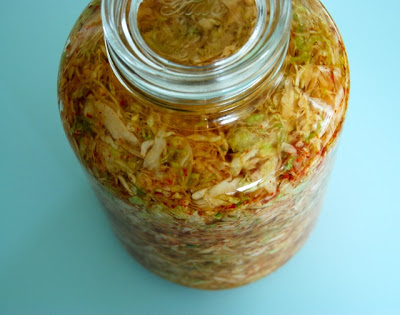
Out of all the fermented and lacto-fermented foods I am eating on a regular basis (and I eat a lot of them!), homemade sauerkraut is probably the easiest one to make. The only ingredients you need are cabbage, salt, and a few days of waiting time. If you want to start eating more probiotics then sauerkraut is a good place to start. It’s also helpful to those who cannot digest dairy as many other probiotics are dairy-based (yogurt, kefir, and so on).

Turkish cabbage

I usually eat the most sauerkraut (and other fermented foods) during winter when seasonal fruit and vegetables are scarce. Cabbage is very accessible, and you can make a few jars of sauerkraut to use later.

Why would you eat sauerkraut? The main benefit of probiotics is that they are good for your gut flora and immune system. They also contain plenty of vitamin C, an important vitamin during the flu season. Sauerkraut and fermentation in general have been widely used by our ancestors because few other food preservation methods existed. Nowadays it has become kind of a lost art which is a real shame because we lose out on some very important health benefits. So, I try to eat as much sauerkraut as I can to get some of those benefits back.

Necessary equipment:

  • a sharp knife
  • optional: a food processor
  • large bowl
  • a potato masher OR a mallet
  • a half gallon glass jar
  • a jar lid OR a vegetable fermentation valve lid

*As you can see, you can make your own homemade sauerkraut without any fancy equipment. However, if you find yourself liking the taste of sauerkraut and will want to continue making it, I recommend you invest in a fermentation crock. It will make the job much easier!

Ingredients:

  • 1 large cabbage head, can be green or purple
  • sea salt

Instructions:

  1. Cut out the cord of the cabbage head and discard.
  2. Cut the cabbage in half and then into four wedges.
  3. Slice the cabbage thinly used a knife or a food processor. Transfer the slices to a large bowl. Layer them with sea salt after each batch. It should look like this: a layer of shredded cabbage, sea salt, shredded cabbage, sea salt, …
  4. Leave the bowl at room temperature for at least an hour and a maximum of three hours. The salt will draw out the water from the cabbage. It will be ready once you can see about one cup of liquid in the bowl.
  5. Mash the cabbage down using a potato masher or a mallet. Mash it until it breaks down a bit.
  6. Transfer the mashed cabbage to your glass jar. Pack it in as tightly as possible.
  7. If there isn’t enough water, pour some more in so that it almost reaches the brim of the jar.
  8. Now cover your jar with a lid. If you are using a regular non-reactive lid, just put it loosely on top. If you are using a valve lid, screw it on tightly. It’s best if the water is touching the lid from the inside.

Storing your Jar

  1. Set your jar in a dark place in your kitchen. I usually do it somewhere under the counter. If you have other food fermenting at the same time, make sure there are at least a few feet of space free.
  2. Uncover the jar each day to check if there is any mold. If there is then you can simply scoop it out (the cabbage is safe). Keep this up for about a week.
  3. Once a week has passed, taste your sauerkraut and decide whether you want to have it fermenting for longer. Personally, I usually keep the process going for two weeks.
  4. Once your sauerkraut is ready, replace the jar lid with a clean one and screw it on tightly. Put the jar in the fridge to stop the fermentation process.

Eat small batches of homemade sauerkraut every day to enjoy its full benefits! For another great recipe, try my tangy red cabbage with ginger recipe.

Homemade Pumpkin Spice Blend with Cardamom

I am all about homemade spice blends! They make the cooking process easier and more efficient, and you don’t need to rely on store-bough spice blends that often contain unwanted and potentially harmful substances. And when the fall comes around, I always prepare a batch of pumpkin spice to use in dessert recipes or to flavor my morning coffee.

Pumpkin Spice

Making your own blends also gives you a chance to customize it to suit your needs. A typical pumpkin spice contains cinnamon, ginger, nutmeg, cloves, and allspice. But what I like to do is add a bit of cardamom as well. And increase the amount of cinnamon because I just love cinnamon!

Necessary equipment:

  • measuring spoons
  • a small mixing bowl
  • a whisk
  • a glass jar with a lid for storage

Ingredients:

  • 1 T. of ground ginger
  • 1 T. of grated nutmeg (preferably fresh!)
  • 1 T. of ground cinnamon
  • 2 t. of ground allspice
  • 1 t. of ground cloves
  • optional: 1 t. of ground cardamom

Instructions:

  1. Put all of the spices in a small mixing bowl and use a whisk to combine them thoroughly.
  2. Transfer into a glass jar and store with a screwed lid at room temperature.

Since we’re in the topic of homemade spices. Check out my homemade taco seasoning recipe!

Surviving Childhood Abuse – My Story

A relative who would often come to our house abused me as a child. It started when I was very little. He would often talk to me one-on-one in a way that made me uncomfortable. I didn’t speak up because I wasn’t even sure why I was uncomfortable and I assumed this was how some adults behave. I now realize that he was grooming me.

Over the span of ages 11 to 14, he assaulted me five times. After that, the person moved away and I never saw him again. I have no idea what happened to him and I do not want to find out. I felt so threatened that he would come back to haunt me again that I never told my mother about it. The first time I formed my experiences into actual spoken words was when I started seeing a therapist in college.

The abuse I experienced wasn’t just in those instances of actual physical and sexual assault. His presence in my life was a constant source of stress and fear that would often render me unable to enjoy my childhood to its fullest. I was manipulated, lied to, and threatened repeatedly. A grown man took advantage of me and made my life hell.

I didn’t know how to define what was happening to me. I never considered that to be a violent act because it’s not like I had any physical markings that would indicate what I went through. No bruises, no cuts, no anything. So it couldn’t have been violence, right?

Violence is: the intentional use of physical force or power, threatened or actual, against oneself, another person, or against a group or community, that either results in or has a high likelihood of resulting in injury, death, psychological harm, maldevelopment, or deprivation.

That’s violence as defined by the World Health Organization. This definition was introduced to me and then explained by my trauma therapist. She was the first person who helped me understand that what happened to me was in fact, an act of violence. This made it easier for me to deal with the situation as an adult.

She also suggested that the fact I didn’t see it that way as a child was a coping mechanism. If I had admitted to myself that I was experiencing violence then I would have no choice but to accept defeat. But because my mind was working in survival mode, I would simply dismiss that possibility. I also downplayed it, thinking to myself that other people have it much worse so why should I be the one that gets help. That was also another coping mechanism.

All of that constant stress resulted in suffering from post-traumatic stress disorder as I grew up. I still experience some of its attacks occasionally but it has gotten much better in the past few years. You can see the symptoms of PTSD here.

For me, hypervigilance was the most obvious symptom. Hypervigilance means being constantly on alert, ready to protect yourself and no ability to relax. I was so tense that I began having regular tension headaches. I had trouble falling asleep.

Metabolism

As you might know from my other posts, stress is very closely linked to metabolism. Abuse, stress, PTSD can all lead to damaged metabolism. In turn, this affects your whole body and overall wellbeing.

You don’t need to have experienced abuse to suffer from the negative effects stress has on your body. Being stuck in a job you hate, having no close friends to turn to in need, suddenly losing someone close to you – all of those happenings can be a source of both acute and chronic stress.

Your body deals with stress by producing a steroid hormone called cortisol. Whenever you experience a sudden onset of acute stress, your body will release a strong dose of cortisol to help you get through that. If you are overly stressed on a regular basis, you will get many doses of cortisol one after another. Those doses build up over time and slow down your metabolism as a part of the body’s defense mechanism.

Here is a short list of the most common factors that lead to increased cortisol production:

  • lack of sleep
  • prolonged or too intense physical exercise
  • caffeine
  • severe calorie restriction
  • long commutes
  • trauma and stressful triggers
  • eating disorders
  • pressure from society

I want to talk a bit more about the last point. Having a damaged metabolism is most likely causing you to gain weight. Shedding that weight is almost impossible without addressing the issue that is causing your metabolism to fail. And dealing with PTSD or abuse is not something you can do in one day.

Not fitting in society’s norms about which body types are accepted and which ones aren’t is another source of stress. Do you see how that vicious circle continues? You can’t lose weight because of pressure from society because you can’t lose weight. It happens more often than you think, I promise. And no amount of healthy diets and exercise can change that.

Diet Recovery and Eat For Heat both explain the link between stress and metabolism very well so I recommend you read them to understand the concept further.

How to deal with abuse?

First, we need to accept how commonly it is happening. We cannot avert our eyes from it and only notice it when it happens to us. If you haven’t experienced abuse yourself, you definitely met someone who did. It really is much more common than we like to think. And it happens no matter what your socioeconomic background is, no matter the city you live in, no matter where you went to school. We need to acknowledge that.

And we need to be supportive of the abuse victims. Not dismissing them or telling them how to feel. Understanding and empathy are what helps people overcome their abuse and PTSD.

It is also vital to seek treatment. People rarely get over abuse on their own and most will require help from a specialist. A specialist will help the victim understand what happened to them and define it. They are like a teacher for learning a new life skill. Be it a therapist, a psychologist, a trauma counselor, or any other person qualified to treat people who experienced abuse. There are specialists in every area, including but not limited to: domestic violence, sexual abuse, childhood abuse, bullying, and many more.

For me, it was much easier to start getting better when I had my own family. I didn’t grow up in a safe environment but I wanted my kids to be able to. For that, I needed to become stronger myself. I want to be the kind of mother who can stand up and support her children in the hardest moments of their lives. So I overcame my abuse for my children.

And just remember one thing: it gets better. You might not believe it now but with the right treatment, you can get your life back.

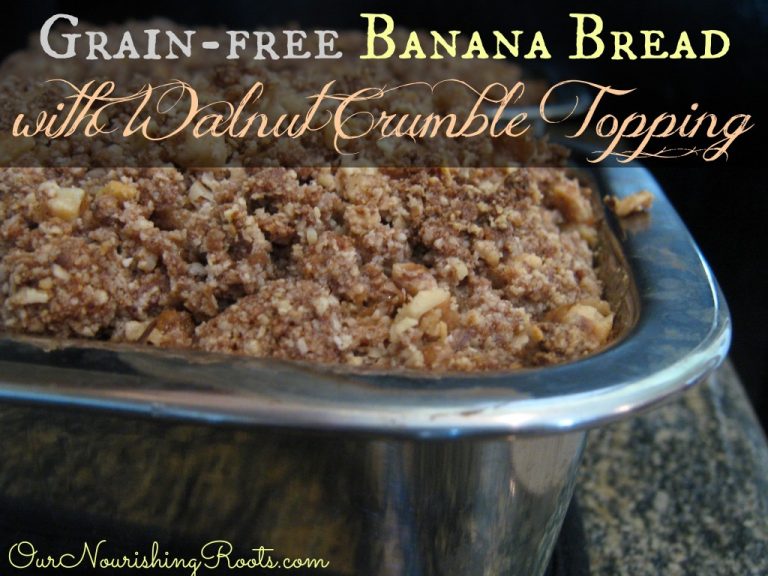
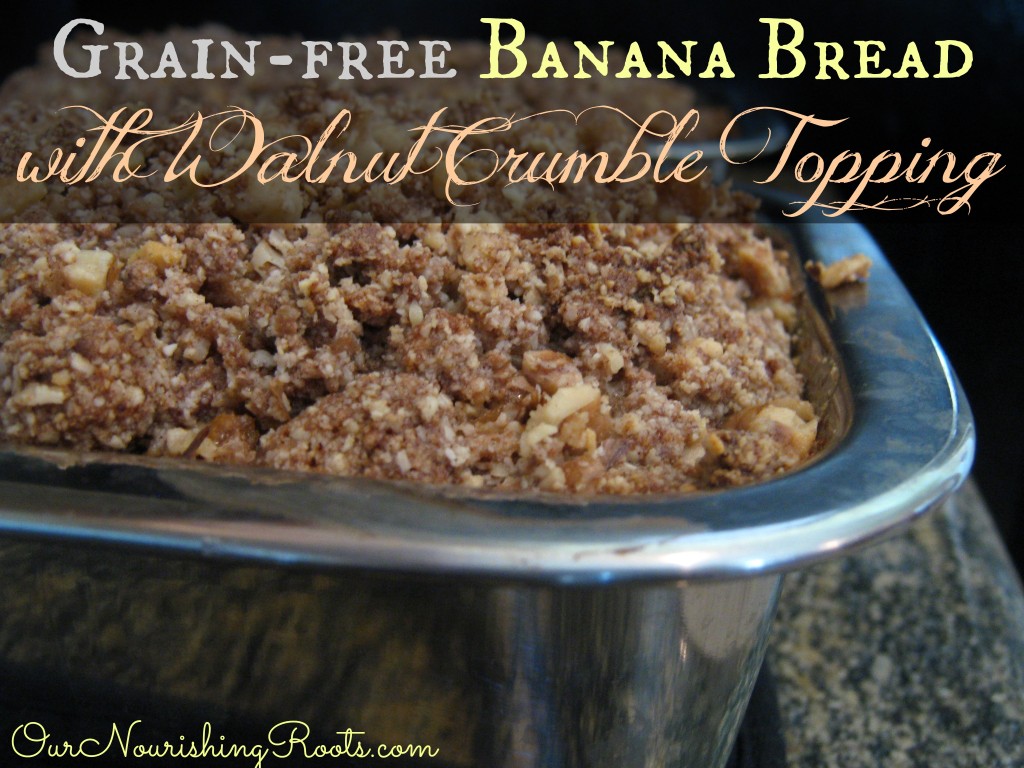
GAPS-friendly Banana Bread with Walnut Crumble

In the fall, I usually make desserts full of aromatic spices that warm me up from the inside. Cinnamon is the absolute king then, but I also heavily partake in nutmeg, vanilla, cardamon, star anise, and vanilla. These spices stay with me until the spring comes.

Banana bread with walnut

But in this recipe for banana bread, I focused on the texture rather than the spices. The mushy bananas make for a perfect cream-like consistency and the walnut crumble on top takes this recipe from good to excellent.

I made this banana bread last weekend, as a small celebration of ending my GAPS into diet (I’m currently giving it my second go!). I managed to get through the intro stage with no major digestive problems so I figured it would be all right for me to enjoy some GAPS-legal dessert that won’t cause any setbacks. And I enjoyed each bite tremendously! The banana bread was deliciously fragrant thanks to the coconuts, and it literally melted in my mouth!

I recommend eating this with a glass of raw milk or coconut milk!

Walnut Crumble

Necessary equipment:

  • a large mixing bowl
  • a wooden spoon

Ingredients:

  • 1/2 cup of almond flour
  • 1/2 cup of chopped walnuts (how to soak and dehydrate nuts, seeds, and beans)
  • 2 T. of expeller-pressed coconut oil OR grass-fed butter (how to make butter)
  • 2 T. of raw honey
  • 1 T. of ground cinnamon
  • a pinch of sea salt

Instructions:

  1. Combine the almond flour with raw honey, chopped walnuts, cinnamon, and sea salt in a large mixing bowl.
  2. Add in melted coconut oil or butter and use a wooden spoon or your fingers to coat all mixture in the fat you chose thoroughly.

GAPS-friendly Banana Bread

Necessary equipment:

  • one baking pan or two smaller pans
  • a small saucepan
  • a wooden spoon
  • a large mixing bowl
  • a whisk
  • an immersion blender OR a food processor

Ingredients:

  • 2 ripe bananas (with spots)
  • 1/2 cup of butter OR coconut oil
  • 1/2 cup of raw honey
  • 6 eggs
  • 3/4 cup of coconut flour
  • 2 t. of vanilla extract
  • 1/2 t. of almond extract
  • 1/2 t. of sea salt
  • 1 cup of chopped walnuts (how to soak and dehydrate nuts, seeds, and beans here)

Instructions:

  1. Preheat the oven to 325 degrees.
  2. Prepare your pan (or two smaller pans) by buttering them up thoroughly.
  3. Heat the butter or coconut oil in a small saucepan over medium heat until it completely melts.
  4. Add honey and stir until combined.
  5. Remove from heat and leave to cool, stirring occasionally.
  6. Whisk the eggs in a large mixing bowl.
  7. Add the salt, vanilla extract, and almond extract to the eggs. Whisk to combine.
  8. Gradually add the butter and honey mixture while whisking. Do in a thin stream so that the eggs won’t cook from the heat.
  9. Add the coconut flour. Use an immersion blender or a food processor to blend the batter together so that there are no clumps left.
  10. Add mashed bananas and use the blender again to fully combine.
  11. Add the chopped walnuts and gently stir them in with a wooden spoon.
  12. Pour the batter into your buttered pan.
  13. Cover the batter with walnut crumble forming an even layer.
  14. Bake for 50 to 65 minutes. The banana bread will be ready when the middle is set (you can check that with a wooden toothpick) and the crumble is lightly browned.
  15. Take out of the oven and let cool before serving.

Enjoy! Also, check out my GAPS-friendly honey sweetened chocolate recipe.

How To Make Homemade Digestif with Bitters

Have you ever had an upset stomach after a large meal and took some Pepto Bismol to relieve it? I admit, back in the old days, I would do so too. But did you know that there is a healthier, more natural way to achieve the same effect? I’m talking about digestifs!

Bitters and Soda

Digestifs are drinks that are traditionally served after dinner as a way to calm down one’s stomach and prevent digestive problems. The tradition of serving digestifs originates from Italy. They go in pair with aperitifs – drinks served before dinner to stimulate the stomach and prepare it for the meal. Most digestives are alcoholic drinks.

I prepare my own digestifs at home to aid my digestive health. I drink them after I had dinner that can potentially cause me health issues like a bloated stomach (so typically after I eat out or have dinner at a house of someone who is not so into clean eating as I am). And I sleep like a baby afterward! They are good not only after a heavy meal but also as a way to help your stomach after an evening of drinking alcohol (yes, you can help yourself with more alcohol) or as a way to relax after a stressful day.

Homemade Digestifs

The main ingredients of my homemade digestifs are alcoholic bitters (also homemade, you can read up on some of my recipes in another post). That’s what bitters were actually first used for – as medicine! They are not that popular now although I must say they are starting to become trendy again. Mostly as a way of enhancing the cocktail flavor but still, that’s something.

The best thing about homemade bitters is that you can fully control what they taste like! There are endless possibilities and ingredients you could use. Bitters are a mixture of a basic liquor, like whiskey or vodka, and an infusion of spices, herbs, flowers, peels, or barks. Most common bitters are usually called aromatic bitters, and they include common spices like cinnamon or star anise and infusions of cassia, gentian, and others. There is also a separate group of orange bitters which can be further divided into fresh orange bitters and spicy orange bitters. All of which can be made at home!

A homemade digestif is a combination of a bitter and soda. I usually use my own homemade water kefir (unflavored) or, if I don’t have on hand, regular mineral water.

Necessary equipment:

  • a tall glass
  • a swizzle stick

Ingredients:

Instructions:

  1. Fill your tall glass with ice cubes up to 3/4 of its height.
  2. Pour in the bitter over the ice cubes.
  3. Fill the glass to the top with unflavored water kefir or mineral water.
  4. Stir with a swizzle stick to combine both ingredients.

How to Make Homemade Caramel Sauce

A good caramel sauce is the base of many delicious desserts so it’s worth taking time to learn how to make it properly at home. Store-bought caramel can often be laden with sweet but harmful corn syrup so I feel it’s much safer to make your own, especially since it’s not that difficult at all.

Simply explained, caramel is a mix of cream and honey cooked together. Depending on the temperature you use, you will end up with either syrup or hard candy. In this recipe, we will be heating our mixture to 225 degrees so that it turns into a delicious caramel liquid. But if you use a lower temperature, you will get soft chewy caramel or hard caramel candy. The ingredients are all the same but the end result will differ so try out making different caramel versions!

Caramel sauce can be used in a variety of ways to instantly enhance your sweet treats. It can be drizzled over hot pancakes, waffles, or a cheesecake. I love eating it with a scoop of vanilla ice cream or together with some buttery shortbread bar. It also works beautifully as a middle layer in cakes, for example pear cake or coconut cake. You can a pinch of sea salt to make salted caramel.

Another use for caramel? In drinks! My personal favorite is homemade caramel macchiato. I add some caramel syrup to fragrant coffee, cool cream, and steaming milk. The result is the most delicious coffee drink of all time!

I love caramel sauce for its versatility. I keep a batch of it in the fridge very often, especially in the summer.

Necessary equipment:

  • a saucepan
  • a wooden spoon
  • a candy thermometer
  • a shallow glass bowl OR a pie plate
  • a glass jar or any other container with a lid for storing

Ingredients:

  • 1 cup of heavy cream
  • 1 cup of honey
  • 1 t. of sea salt

Instructions:

  1. Fill your shallow bowl halfway with cold water and ice. This will be your ice water bath that you’ll use later. Set aside for now.
  2. Heat the heavy cream with salt in a saucepan over medium heat. Do so until you can see bubbles forming around the edges of the saucepan.
  3. Add the honey. Keep stirring until the mixture fully combines and becomes smooth.
  4. Turn the heat up to a boil.
  5. Attach the candy thermometer to the side of the saucepan. The tip should be submerged in the mixture but not so deep that it touches the bottom of the pan.
  6. Lower the heat to medium again and keep the mixture simmering steadily.
  7. Stir the mixture with a wooden spoon and cook for about 10 to 15 minutes.
  8. Once it reaches 225 degrees, turn off the heat.
  9. Carefully put the hot saucepan in the ice water bath. Continue stirring while the caramel sauce cools and thickens to a nice consistency.
  10. Your caramel sauce is now ready! Transfer to a glass jar and keep in the fridge for later use.

A guide to treating croup with Mullein

Croup is a common respiratory infection that fortunately isn’t that dangerous but it tends to scare the crap out of parents due to how badly it sounds. Croup affects children more than adults because their air pipes and other respiratory organs are smaller than ours and more prone to face complications from swelling. It causes a horrible cough that keeps you up at night and doesn’t allow for any rest. We just had a case of croup make its way through our immediate family which is what inspired me to write this post.

Most croup cases aren’t serious enough to warrant a visit to the hospital and symptoms can be relatively easily treated at home. But I understand very well how the loud cough can be distressing to hear for a parent and if you are genuinely worried then do take your child to the doctor so that you can relieve your anxiety. If I notice my child is having serious breathing difficulty or his condition worsens suddenly, I will also not hesitate and have a medical professional check him out. But otherwise, I am sticking with homemade treatments.

So how exactly do you treat croup at home? Here are my four top remedies, in the order of use frequency.

  1. Mullein infusions: Mullein is a herb that is very helpful in treating croup. I prepare my mullein infusions with some raw honey and freshly squeezed lemon.
  2. Mist humidifier: a humidifier that releases warm mist is a life-saver at night when your child is suffering from a bad coughing fit. The warm mist is soothing for the dry throat and helps the airways unclog.
  3. Cold air: this one is a bit counterintuitive but I swear that when it works, it works very well. If my son has a coughing attack that won’t stop no matter what, I will take him outside to breathe in the crisp fresh air for about 15 minutes. Sometimes the improvement can be heard immediately.
  4. Elderberry: Elderberry syrup is full of minerals and vitamins that help your body fight off diseases like common colds and croup. The amount of vitamin C and antioxidants by itself is enough to make it worth drinking elderberry syrup every day during flu season.

In this post, I want to focus on the first item from the list above: mullein.

Mullein leaves have long been used as a treatment for respiratory ailments, croup included. Mullein aids in relieving congestions by breaking down the mucus and soothing the inflamed throat (source).

To take advantage of mullein’s beneficial properties, you need to first make mullein-infused water. You do that by steeping the leaves in boiling water. That way, the properties of the herbs will be carried by the water as well. Take the solid leaves out and you will have mullein-infused water. From that water, you can then make mullein tea and other infusions. You can even put in a steamer and breathe it in directly which might help with severe congestions.

Now, you should know that mullein leaves can be a bit bitter. The longer you leave them in, the more bitter your mullein-infused water will be. But also, the longer the steeping time, the more mullein benefits will be transported to the water.

The absolute shortest duration is 5 minutes but I would definitely leave the leaves in for longer. Anywhere beyond 30 minutes will result in a rather bitter-tasting infusion. To get the most benefits, the leaves should be steeped for up to 4 hours.

To counter the bitter taste, I use raw honey. The infusion tastes much better then and even children won’t complain about drinking it. Not to mention that raw honey has plenty of immune system boosting properties on its own (source).

Another method of utilizing mullein is turning the infusion into an oil. That oil can be then applied to help with ear infections(source).

Necessary equipment:

  • a tea kettle
  • a tea infuser OR a French press

Ingredients:

  • 1/2 cup of mullein leaves
  • 5 cups of boiling water
  • a spoonful of raw honey
  • optional: a slice of lemon

Instructions:

  1. Put the mullein leaves into your tea infuser or French press.
  2. Pour the boiling water over the leaves.
  3. Leave to steep for at least 30 minutes or more (I usually go for about 2 hours).
  4. Remove the leaves so that you are left with only the mullein-infused water.
  5. Sweeten the infusion with honey and put the lemon slice in.
  6. Warm it up again before serving.