Home Blog Page 106

Fermenting Chiles

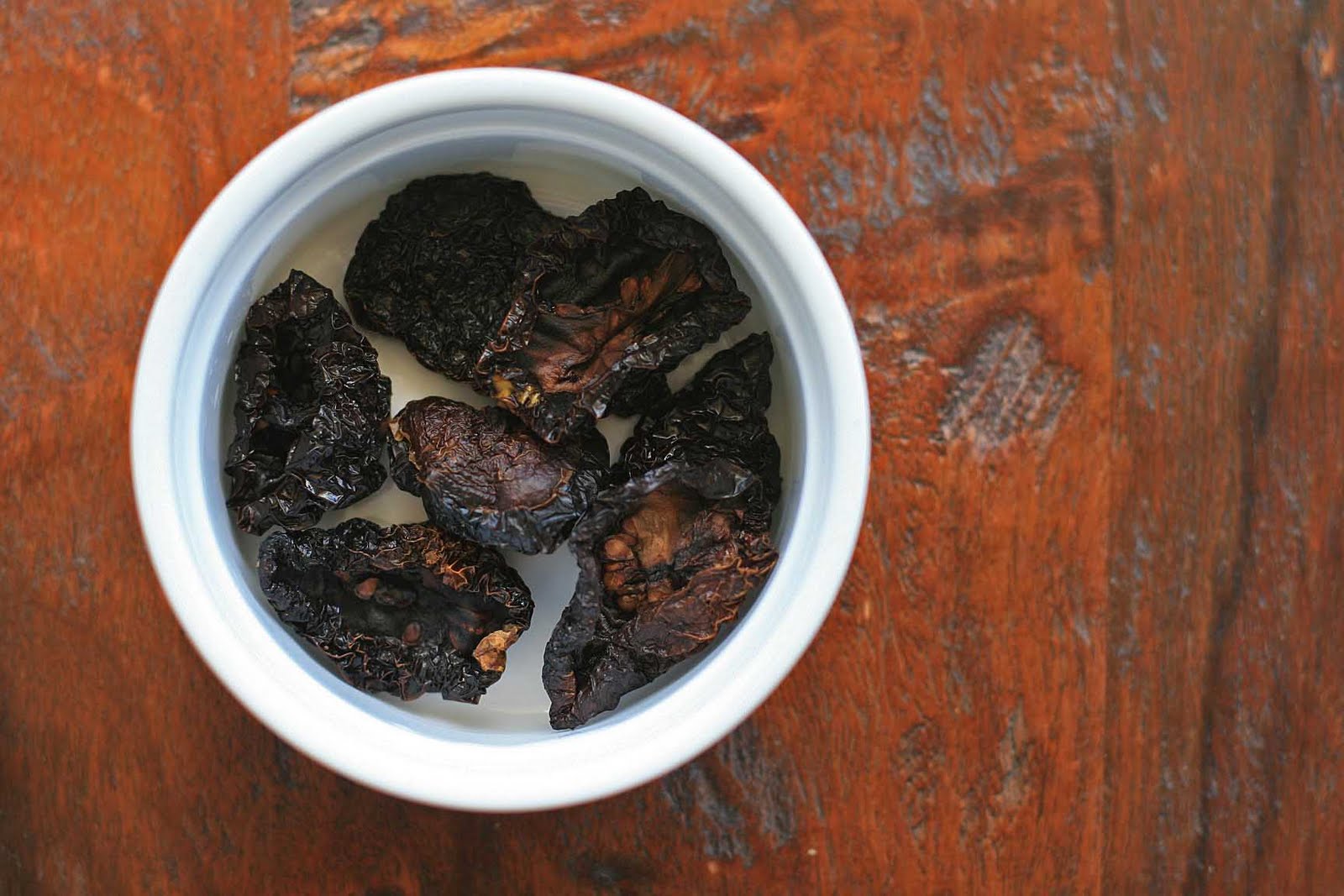
These may look innocent enough to you

But that’s because your eyes aren’t watering from the heat. If you’re a chile head like me, or another person I know then you might like what I’m about to tell you. I like my chiles homegrown (or local farmer grown) and I like my chiles all year ’round.

Fermenting Chiles

1/2 pound of chiles (or mild peppers if you’re more of a sweet head)
1 pint of water
1 & 1/4 tablespoons of sea salt
1 quart container

Directions:

1. Wash and dry the chiles, leave them whole if they are small, cut in pieces if larger. Place in the quart container.

2. Dissolve the salt in the water and pour over chiles to cover. Important: you need to make sure the chiles are completely submerged in the brine. I placed a smaller sized jar on top (inside the larger jar) to help submerge the chiles. I also had brine left over which I sealed in the top jar in case I need more brine once the chiles start to ferment. You can always make more brine if you need, using the ratio above.

You don’t need a jar in a jar, you can put them in a bowl that fits a plate inside, and some kind of weight on top of that. Make sure whatever you use is clean of course.

3. Keep the chiles at room temperature, checking the next day, and the day after to make sure they are still submerged. Add more brine if you need.

gap

4. You may see a bit of something that looks like ‘scum’ form on the top of the brine, and/or the jar or plate you have submerged.

That’s ok. Just skim it off and rinse off the jar or plate and replace it, making sure the chiles are submerged. Everything should calm down in a few days. Then you can pretty much leave it alone and just check every 3 days or so to make sure all is in order.

5. In about 3 weeks or so, give them a taste. They should have all of that chile goodness, with an added tang of sour (Yum!). When you deem them ready, drain the brine into a saucepan, bring to a boil and skim off any residue on top. Let the brine cool.

6. Put the chiles into a clean jar, pour the boiled & cooled brine over, cap the jar and place in fridge.

…That my peeps, is how I enjoy homegrown chiles all year – or at least through the winter months. I use them for cooking all manner of curries and stir-frys, and anywhere fresh chiles are called for in cooking.

I also enjoy these babies fresh from the jar whenever a dish needs a little – or a lot of – heat.

Can Jam Round-Up: Asparagus

I was in a real pickle about where to post all these amazing asparagus recipes this month.

I think I made the right choice.


Pickles, Pickles & More Pickles!

asparagus pickles – post-industrial eating, they look gorgeous! And I am so happy you are back on your feet. I think you are going to enjoy these little lovelies when you pop them open!

bloody mary asparagus – locally preserved, some like it hot, and some like it hotter (me). Love the horseradish and hot sauce additions!

last minute pickled asparagus spears – put-a-lid-on-it you are a trooper you are. Your little one is gonna love pickles I tell ya!

pickled asparagus – café del manolo as a garnish for ceaser salad! sounds like a perfect pairing! Makes me want to pickle some spears right now!

pickled asparagus – flamingo musings but I love rhubarb & fennel!! Er, nevermind…we’re talkin’ about asparagus here and it’s one of your favorites (whew!). About that recipe…what? You don’t have 22 lbs. of asparagus laying around?

pickled asparagus – nutmeg, nutmeg…love the nutmeg! (Ahem, and please see below regarding local!) 🙂

gap

pickled asparagus – I think you are really going to like these…the lemon adds a nice twist!

pickled asparagus – mother’s kitchen tellin’ it like it is…thanks for that link! A can jammer can never be too informed!

pickled asparagus – hip girl’s guide to homemaking, I totally dig your resourcefulness! And it’s all about a kitchen eco-system. It’s very important when trying to eat seasonally, locally, & stretching all that year round.

pickled asparagus & fiddleheads – backyard farms I absolutely love the way you fiddled with this recipe!

pickled asparagus with curry & spices – prospect: the pantry ok, I love anything curried! I am really curry-ous (had to) to know how these turned out, let us know! …oh, and talk to Joel above about floaters. 😉

spicy pickled asparagus – café Libby ya need to pack ’em in, pack ’em in, and maybe give ’em a seat belt ala well preserved. But they’ll taste just as good, so no worries!

spicy pickled asparagus – sustainable pantry thank you so much for that tip on Chinese medicine – now I have an excuse to be a sour puss! 😉 …and don’t worry, June 1st is almost here. But I am sure you will enjoy this little jar!

spicy pickled asparagus – oh briggsy! I love how you peeps put two and two together…asparagus & booze. Why not? Works for me.

tarragon pickled asparagus – notes from a country girl living in the city oh how very French of you! Tarragon she adds…for sure you are gonna love these! Let us know when you pop them open!

Strawberry Ice cream

If you happened to be following what I’ve dubbed ‘the butter chronicles’ over here, then you know that there’s a lotta bright and deep colored butter in my future. Lovingly made by me (and M) from the milk of happy spring-grass munching jersey cows. If you’ve been hanging around my Facebook page long enough then you may have picked up that I LOVE ICE CREAM!!! And this strawberry ice cream is no exception!

Sorry to shout – I just get so excited. Then how, says you, can I have all that luscious dairy dripping around my crib and not use a wee bit for my paws-down favorite dessert? I can’t. I couldn’t. I didn’t.

But first, if you don’t have an ice cream maker and you love ice cream then I must tell you about this one. It practically lives on my kitchen counter all summer. It makes ice cream making way easier than pie (and hell, if you really want to win friends and influence people make ice cream and pie for dessert). It’s worth it’s weight in gold for my summers, so the price didn’t bother me. But I can tell you this: there is no doubt that it will be on deep sale at the end of the summer. So if you can’t swing the coins be on the look-out in September and you’ll be prepared next summer.

Strawberries

As luck would have it, early-glow strawberries blushed into season at my local u-pick farm just as I was nearing the butter-making end. I kept one half gallon of cream on reserve in the fridge, and a quart of créme fraîche too. That, sugar and the mighty berries are pretty much all that’s needed for this decadent frozen delight.

You’ll want a small shot of kirsch too, for the texture. You can use vodka if you don’t have it. It works the same way….grab a lemon from the fridge on your way over. Let’s get this party started. Strawberry créme fraîche ice cream adapted from the perfect scoop by David Lebovitz.

Ingredients:

1 pound strawberries, rinsed quickly in cold water then hulled
1 cup heavy cream
3/4 cup sugar (I use organic evaporated cane)
1 tablespoon kirsch, or vodka
1/2 teaspoon fresh lemon juice
1 cup créme fraîche

Directions:

1. add sugar and kirsch to strawberries and let set in a covered bowl for a good hour. Toss every once in a while to help sugar dissolve.

2. place strawberries in a blender or food processor. Add lemon juice, cream and créme fraîche and pulse a few times until everything is blended. Don’t over do the pulsing if you want some chunks of berries to remain. Pulse more for a smoother ice cream, maker’s choice.

3. cover and place in the fridge for at least 1 hour, and up to overnight.

4. freeze in your ice cream maker according to manufactures instructions. For those of you that have not yet used an ice cream maker, don’t let this line scare you. Basically, you pour it in, turn it on, and let it run for 15-20 minutes at which point you will have the creamiest, most berry-packed ice cream you can imagine.

For more delicious ice cream recipes click here!

Rhubarb Krack

0

Yes I did think twice about calling this monster, and hence this post, rhubarb krack. In fact, at first type I had the old-fashioned name up there: kuchen.

Much as I love old-fashion desserts, both in their taste and the way their names feel jolly on the tongue, I could not allow myself to do it.

Because that would fail to express just how evil this really is. Speaking of evil and subsequently evil doers I have to give a big tigress-sized shout out to Rebecca of the lovely blog cakewalk because she was the one pushin’ this on her blog last may. It’s been passed down from her paternal grandmother and it is pass down worthy indeed!

That is of course if you’re not afraid of a little butter, sugar and eggs. (Why would you be? Don’t believe the hype!) Or if you happen to have gobs of rhubarb waking you up at night in this fine spring season – or chickens even, layin’ around all egg happy on these long lit days. Then I see no reason why you shouldn’t run to your kitchen this very minute, eggs, rhubarb, butter in hand.

Except, of course, for this one small caveat: this rich n’ buttery, sweet n’ tart, custard n’ rhubarb filled krack is killer! I mean like, it be callin’ your name at night from the fridge…

Hence, the name change. Rebecca, I hope your grandma understands. I didn’t do a whole lotta changing from rebecca’s original recipe – just a few minor fiddles. Here’s what I did:

Rhubarb Krack

2 cups whole wheat pastry flour
2/3 cup cold unsalted* butter, cut into 1/2 inch pieces
7 eggs
8 to 9 cups rhubarb, cut into 3/4 to 1 inch slices
2 cups sugar

For topping:
1 cup whole wheat pastry flour
1/2 to 3/4 cup sugar **
1/2 cup cold unsalted butter, cut into 1/2 inch pieces

11 inch springform pan (you can use any comparable sized pan, but I love the unveiled rustic look and the easiness of cut a springform pan affords).

1. Grease and flour the bottom and sides of pan. Preheat oven to 350 degrees.

2. In a food processor pulse together the 2 cups flour, 2/3 cup butter and 1 egg until it forms a sand like texture and clumps together when pressed between finger and thumb.

3. Press the mixture evenly into the bottom of your springform. Place the rhubarb on top. Your pan will be chock full o’ rhubarb if you pack in a hefty 8 plus cups. This is not a dainty dessert.

4. Whisk together the remaining 6 eggs and two cups sugar and pour over rhubarb.

5. Pulse the topping ingredients together until crumbly. Sprinkle evenly over the entire lot.

6. Bake in oven for 70-80 minutes or until topping is browned.

Let cool completely – preferably overnight – before removing sides of pan. This is just as addicting at room temperature with or without ice cream. But my favorite way is straight-up, chilled from the fridge. The cool crumble-covered custard meshes so perfectly with the sharpness of the rhubarb, all of it wobbling atop a thickly padded crust. When it disappears before your very mouth, there is no doubt that it will leave you wanting more. I’m not kidding, I think I’m in trouble. Here, have a piece.

Can Jam November Round-up: Pomes

Apples, and quince and pears, oh my!

Below is a cornucopia of autumn delights – all put up in jars for later. Fall is my favorite preserving season. After all, apples and pears get pretty adamant about getting jarred. And quince, my new found favorite, seems to be all the rage this year around the canning blogosphere.

If you’ve been jamming the can, either at home or blogging about it…WOW! I can’t believe we are in the 11th month!

If you’ve never canned before, I hope you’ve been inspired by this group of wonderfully industrious and creative people. And if you haven’t quite mustered the gumption to start yet, I say, start here! Because applesauce and apple butter practically can themselves! So giddy up and get some pomes in jars!

Like this:


Butters & Sauces

apple thyme butter – showfood chef I don’t think you really understand how much I love jam on biscuits do you? Especially warm, flaky biscuits. I don’t appreciate being tortured nearly every time I read your can jam post. 😉

applesauce – bigger than a breadbox what could be more fun than making applesauce with a dear friend? (Making applesauce with a dear friend while drinking a crisp wine and shootin’ the shiz would be my guess…)

lazybones spiced apple butter – rufus & clementine this is quintessentially Nikki. Not that I’m sayin’ you’re lazy, just that you like to meander. I love that you got to a point to know when you can do this in canning. And then did it inexcusably!

pear and buddha’s hand butter – wine book girl this looks amazing, I really love the idea of a zesty butter!

salted caramel pear butter – knit and nosh gulp! just saying that makes my mouth water…

vanilla applesauce – toronto tasting notes I really do need to make me some straight-up applesauce, don’t I? The ‘great with hot porridge’ got me!

vanilla pear butter – market life sf your favorite thing you have ever canned? Oh my! …cognac? Oh my! Did you just step it up like, a gazillion notches? Sounds like!

Apple Marmalade with Rosemary

At some point I opened my fridge last week and precisely 4 apples, 1 orange and 2 lemons sky-dove directly toward my toes and proceeded to spread themselves over the kitchen floor, like insurgents deftly finding their marks. There were many more behind them waiting for their signal.

I really can’t tell you exactly how I ended up with a bottom shelf loaded with citrus and a myriad of apples (not to mention the quince & cranberries) except for the fact that when I made the move back down to LIC for the winter I grabbed as many apples from local farmers as I could.

Gingery Lime Pickle

I know, I know, another one. Look, I’m not trying to hide the fact that during January and February I’m a citrus pickle making machine. Nor am I trying to hide my addiction to what I call Indian ‘sun’ pickles. Meaning pickles that are preserved – fermented actually – by allowing them to sit in the sun for a number of weeks.

I figure since I’m gettin’ in your face with a whole lotta these recipes this season, the least I can do is give you a little background info:

These citrus pickles are really not much different than the typical middle eastern preserved lemons by way of which they are preserved. In the middle eastern variety, there is always salt and sometimes spices in the mix.

In the Indian variety, there’s salt and always spices. Sometimes a lot of spices. There’s sweet chutney-like versions with sugar. And some traditional Indian citrus pickles even include oil, but those are not my favorite.

gap

One distinct difference between the two is the amount of salt – the middle eastern version typically has more. Because of the high amount of salt, each section is usually rinsed before eaten, and the lemon flesh is discarded or used for other purposes. Middle eastern preserved lemons are most often added to a dish; chopped and tossed in a tagine, a lentil dish, or a salad.

An Indian pickle is served as a condiment on the side of the plate, or more accurately in a little bowl all it’s own. They are most often eaten with the main curries, flatbreads, or rice dishes. They are not rinsed, but usually only a scant tablespoon will be consumed with the entire meal. Taken in little bites along with mouthfuls of the main dish, a good Indian or south Asian pickle will be powerfully salty, hot, sweet, or sour. Often more than one of these combined. And it will almost always be too intense to eat on its own.

GAP

A 2 pound batch of citrus can make enough to last a year or more. For the best keeping quality of both Indian pickles or middle eastern preserved citrus, follow these precautions:

  • When making them, be sure that the peels are absolutely free of water, they must be completely dry. Water-wet peels going into a jar are pretty much guaranteed to foster mold.
  • Once it has completely broken down, and for long term storage in the fridge, make sure all of the citrus is submerged in the gel-like liquid.
  • A clean and dry spoon must be used to take out what will be served. Place the cap right back on, and if you go back for more, use a new spoon. If there is an uneaten portion, never put it back in the jar, just eat it later!
  • When making big batches, I transfer them to smaller jars before putting in the fridge, and go through them one at a time. Doing this usually eliminates any problems as you are not going in and out of a jar for over a year.

This is my yearly lime version – hot and gingery!

Gingery Lime Pickle

8 large organic limes
juice of 3 limes (or 2 lemons)
1/2 cup sea salt
1/2 cup sugar
1/4 cup cayenne powder (or paprika, or 1/2 & 1/2)
1 cup julienned ginger
3 teaspoons turmeric powder
1 tablespoon plus 1 teaspoon fenugreek seeds
1 teaspoon black or brown mustard seeds
1/4 teaspoon asafoetida powder
1/2 gallon jar

Directions:

1. Wipe limes clean with a wet cloth, and then a dry. Let sit in a warm place for an hour or so to dry completely. Slice off button ends, and quarter.

2. Place one teaspoon of fenugreek seeds, mustard seeds and asafoetida powder in a dry skillet and toast for about 3-4 minutes, until the fenugreek seeds are just a shade darker. (If you have never smelled asafoetida powder before, don’t be alarmed, it’s supposed to smell that way). Let cool and grind in a spice grinder or with a mortar and pestle.

3. Fill the jar with limes and ginger. Add the spice powder, fenugreek seeds, salt, sugar and turmeric. Add the cayenne powder, paprika, or some mixture thereof. Or you can go for this:

gap

Extra hot cayenne pepper. Do take note, that though this seems like a lot of hot, it mellows out during the preserving process – and you do want a bite.

4. Pour the lemon juice into the jar. Place the cap on and give it a good shake this way and that, making sure that the spices distribute evenly around the ginger and citrus.

5. Place it in the sun, giving it a good shake once a day. If you see the cap lifting in the center from pressure, or the whole thing hisses at you when you walk by, don’t take it personally, slowly open it and release the fermentation gasses. Gently. If it’s hot outside when you make these, put them outdoors, making sure to bring them in at night. Or just keep them on a sunny windowsill.

6. This Indian pickle generally takes about 6 weeks, and sometimes up to 8 or 9. Test after the 5 week mark. Limes are usually slower to break down than lemons. You want to be able to sink your teeth into them, and your mouth should explode when you do.

Homemade Feta

Some of you may remember my trip to Turkey last summer. I fell in love with the country, its people and their way of eating. Feta is a very common type of cheese in that part of the world, eaten in many ways.

Upon arriving home from Turkey last summer, I set out to learn how to make it. We’ve been eating it regularly ever since. Although it’s slightly more involved than say, homemade yogurt, it’s not all that difficult. And as with anything homemade, once you get the hang of it, you can tweak it until you get exactly what your taste buds are looking for.

I cannot begin any discussion about home cheese making without first paying homage to Madame Fromage – Ricki Carroll, whom I was lucky enough to take a cheese making workshop with about 3 years ago. Her book is to cheese making what Linda Ziedrich’s book is to pickling: indispensable. And even better, her mail-order biz New England Cheesemaking Supply co. is a one stop shop for everything needed for home cheese making, all artfully packaged in non-threatening home dairy making sizes. And the stuff gets to your door quick!

Feta is a salty cheese traditionally made with sheep or goat’s milk. Store-bought pasteurized goat’s milk is what is needed for this feta recipe, and it should be fairly easy to find.

Homemade Feta

Adapted from Home Cheese Making 

1 gallon pasteurized whole goat’s milk
1 packet direct set (DS) mesophilic starter
1/2 teaspoon liquid rennet or 1/4 vegetable rennet tablet
2 tablespoons cheese salt or sea salt (must be fine grained & contain no iodine) thermometer slotted spoon or flat ladle
fine meshed cheese cloth or butter muslin
yield – 1 pound

Directions: 

1. Place milk in a large stainless steel pot. Heat to 86 degrees. This is how you do it:

Fill the sink with hot water – hopefully in line to the top of the milk, or as close as you can to it. Place the pot in the water with a thermometer and let sit until 86 degrees.

2. Once milk reaches 86 degrees, take the pot out of the sink and add the packet of mesophilic starter. Stir to combine, cover and let sit for 1 hour.

3. Dilute either 1/2 teaspoon of liquid rennet or 1/4 rennet tablet in 1/4 cup cool unchlorinated water. (Do not measure this over the milk please! I don’t want you to learn the hard way). Add this to the milk and stir in an up and down motion. Do this for approximately 3 minutes.

4. Cover the milk. Reheat the water in sink and place pot back in. Bring the milk temperature back to 86 degrees. Keep it at 86 degrees for 1 hour. To keep the milk at 86 degrees for one hour, you will need to periodically adjust the water by adding hot and/or cold to adjust the temperature.

If you are like me, you probably won’t be able to keep it at exactly 86 degrees for one hour. It will be fluctuating, and you will be dancing with the water, your sink, and the pot. That’s ok.

gap

Put on some good music.

The goal is to let it set for that hour, so if you find that the temperature is too high, and it is not coming down fast enough when you add cold water to the sink, lift it out of the sink for a bit, but do it gently. Inside the pot, magic is happening. The whey is separating and the milk is starting to coagulate!

5. After one hour, take the top off and: happy dance!

6. Now you get to cut the curds. You can do this with a curd cutter, or a regular old knife. You want to try and cut the curds into 1/2 inch cubes. If the set is a bit soft and you feel like it will crumble (this batch set soft), you can go a bit bigger on the cubes. Start by slicing one way, and then the other. Like a tic tac toe grid.

After you’ve cut the grid, you need to cut down. To do this, start in the center pointing toward one side of the pot. Angle 1/2 inch down and cut across the pot and all the way to the end. Then go down 1 inch and do the same, then 1 1/2 inches down and do the same. Once you’ve cut one side all the way down to the bottom, start in the middle all over again toward the other side of the pot. Yes, I’m available for questions.

7. Stir the curds very gently for 20 minutes.

gap

8. Place cheesecloth in a colander and pour curds & whey over. Lift the cheesecloth up and tie the ends in a knot. Hang over the sink to drain for 4 hours.

9. After 4 hours untie the cloth and cut the cheese into approximately one inch cubes by first slicing, and then cubing. I am not very particular about this because I like the rustic look of uneven cubes, and when eaten I usually crumble it. That said for the proper aging and salting, you will want it to be somewhat uniform. In a container, place a layer of cheese cubes, sprinkle with salt, another layer of cheese cubes, sprinkle with salt, etc. Cover and place in refrigerator to age. Cheese will be ready to eat in 4-5 days.

The possibilities for serving feta are endless: on tomatoes, in bean and grain dishes, on its own with a drizzle of olive oil and a sprinkling of black pepper & fresh herbs – take that and smash it all over a thick slice of country bread, or just a warmed pita. In all manner of salads, egg dishes, & veggies of every persuasion. And my personal fave – served with big hunks of fresh summer melon and a shot of ground chili pepper.

Rhubarb ketchup

I just saw rhubarb for $4.99 a pound at my local co-op. Can someone remind me to have a rhubarb harvesting party next year? ‘Cause I’m sittin’ on a goldmine …er, greenmine? Grant it, it was the ‘prettier’ red kind, but I can’t complain. This patch was here when I got here and I have a feeling it will be here long after I am.

It’s the first to wake each year and promptly unfurl it’s lushness over an otherwise barren landscape. (Over a month into its return and you can just start to see flecks of green on both the gooseberries and blueberries to the left). It’s arrival signals the start of the new preserving season in earnest and it always offers me this challenge: what am I gonna do with 50 kabillion tons of rhubarb?

Rhubarb Ketchup

Adapted from preserves: river cottage handbook #2 by Pam Corbin
4 & 1/2 pounds rhubarb, sliced lengthwise, then to 1/4 inch dice
4 medium shallots, about 1 & 1/4 cup chopped
3 garlic cloves, peeled & chopped
scant 1/2 cup cider vinegar
1/2 cup light brown sugar
1 tsp ground cumin
d1 tsp ground coriander
1 tsp salt
roasting trays
food mill or sieve
1/2 pint & pint mason jars yield: 4-5 pints


Directions

1. Preheat oven to 350 degrees as you are chopping the rhubarb, shallots & garlic.

2. Place chopped vegetables on 1 or 2 roasting trays and place in oven. If you are using 2 & placing on two racks. Switch positions halfway through. Roast for approximately one hour until everything is very soft.

3. If you use whole spices (and I strongly suggest that you do, they last longer & taste better!) place them in a mortar or spice grinder and grind to a fine powder.

4. When vegetables are done, push through a sieve or grind through a food mill.

5. Place in a heavy bottom sauce pan along with the sugar, vinegar, salt & spices. Heat on low until the sugar melts, once melted turn up the heat and bring to a simmer. Simmer for 20 minutes or until desired thickness.

6. Process in a hot water bath for 15 minutes. (Note: when filling hot jars, make sure to give the full jar a few taps on the counter before putting the lid on to release any air bubbles).

In the *olden* days peeps used to make ketchup out of many things. Whenever I run across an old ketchup recipe that sounds nothing like the tomato-y stuff we are so accustomed to today I’m intrigued. Since I have plenty of rhubarb to experiment with I thought, why not? Verdict? It’s…interesting. Don’t get me wrong, it’s good! It has a pungent tang that is surely more mouth puckering than regular tomato ketchup. The salt and sugar are most definitely needed to balance that effect. The shallots, garlic and spices are a nod in the direction of the condiment we know so well.