

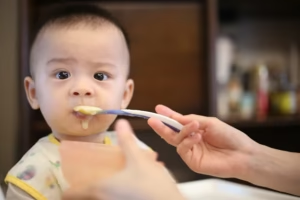
Welcoming a baby home changes nearly every room in the house, and the kitchen is no exception. You start thinking about food safety, storage, and what actually belongs in your pantry when a tiny human is depending on you.
Research shows more than two-thirds of parents carry real concerns about the quality of food their children consume daily. The worry is valid, and it points to something worth paying attention to early on.
According to Talker Research data, nearly 30% of parents say they have felt judged by other parents specifically for what their children eat. This tells you just how loaded the topic can get. Food choices for your baby are personal, and the pressure from the outside world does not make it any easier.
This article walks you through the practical steps to get your kitchen truly baby-ready.
Stock Up the Right Formula
Feeding a newborn starts with one big question. For many families, the answer involves formula at some point. Around 84% of women in the USA begin breastfeeding, but lactation disruption is far more common than people expect. In such cases, formula feeding becomes a necessary bridge.
Before you stock up, read those nutritional labels closely and check for any active product recalls. Baby formula should be free of additives and added sugar. Sadly, the reality is far from ideal right now. A recent report reveals that 71% of US baby formula is loaded with added sugar and additives.
Some infants show sensitivity to cow milk proteins early on, with symptoms like bloating, fussiness, or rashes that are easy to miss at first. Plant-based options, typically soy-based, work better for some babies. Safety has to come first. The recent Similac lawsuit put this into sharp focus for a lot of parents.
TorHoerman Law notes that Abbott allegedly failed to give consumers adequate warning about NEC-related risks connected to their cow milk-based formula products. Knowing this kind of history helps you ask better questions and shop more carefully.
Organize for Single-Handed Use
Nobody warns you about this one. However, once you’re in it, you’ll wonder why nobody talked about it more. New parents spend a surprising amount of time doing everything with one hand while the other arm is completely occupied with a baby who refuses to be put down. Your kitchen layout needs to work around that reality, not against it.
Keep bottles, nipples, and formula within arm’s reach at counter level so grabbing them mid-feed requires zero effort. Drawer organizers help you find things fast without rummaging.
Heavy appliances like your bottle sterilizer or food processor work best when they live on the counter permanently. The less you have to search, bend, or juggle, the smoother feeding time gets for everyone.
Prep and Store Purees the Right Way
Batch cooking purees is one of those habits that feels like a small effort on Sunday and saves you completely on a Wednesday night. Cook a good quantity, blend it smooth, and freeze portions in an ice cube tray so you can thaw what you need without waste. Each cube typically holds about one ounce, which makes portioning for younger babies really straightforward.
Storage containers matter more than people think. Go strictly for BPA-free options, glass, or certified safe plastic. Certain chemicals in regular containers can leach into food, especially when heated.
Speaking of heating, always warm purees gently on the stovetop or in warm water. Microwaves heat unevenly and can create hot spots that are genuinely unsafe for babies.
Allergy-proof Your Prepping & Cooking Space
Starting solid foods for kids comes with a learning curve around allergens that every parent needs to get comfortable with. Roughly 4 to 8% of children in the USA live with some type of food allergy, so this is not a small concern by any measure.
Common allergens like peanuts, eggs, dairy, tree nuts, wheat, and soy are the ones to watch most closely when you begin introducing new foods.
Your baby-friendly kitchen setup should make this process clear and controlled. Start by prepping a dedicated baby food zone. This can be one section of your counter where you only handle your baby’s meals. Keep a separate cutting board, a small knife, and one bowl or blender just for this purpose.
Prep your baby’s food first, before cooking anything else for the family. This reduces the chance of allergen traces carrying over from other ingredients.
Wash everything thoroughly between uses, and always check packaged food labels for hidden allergen traces before anything goes into your baby’s meal. A little extra attention at this stage saves a lot of worry later.
Interestingly, current pediatric guidance actually leans toward introducing allergens earlier rather than later. Early exposure has shown promise in reducing allergy risk over time.
When (and if) introducing allergens, keep your prep simple and consistent. Use clean tools, measure small amounts, and serve the food on its own. This way, even if there is a reaction, you know exactly what caused it.
Avoid Stocking Food in Bulk
We know it feels responsible to buy ahead, a big batch of purees, a dozen formula cans, a tower of snack packs, but baby food does not reward that kind of thinking. Nutritional needs change fast at this stage, sometimes month to month, and what works perfectly at four months can be completely wrong by six.
Shelf lives are shorter than most packaging states. Therefore, buying in large quantities often means tossing more than you use. Plus, with food prices climbing around 2.9%, spending big on bulk stock that your baby will outgrow quickly would be an unnecessary hit to your grocery budget.
Buy in smaller, more frequent batches instead, and let your baby’s current stage guide what you actually bring home. Staying flexible here saves you both money and a very cluttered pantry.
Your Kitchen Is Ready. Now Breathe.
None of this has to be perfect, and honestly, it won’t be, and that’s completely fine. The fact that you’re thinking this carefully about your baby’s environment already puts you ahead.
Small changes in how you organize, stock, and prep make a bigger difference than any expensive gadget or picture-perfect pantry ever will.
Trust yourself a little more than you think you should. You’ll figure out what works for your baby faster than you expect, and you’ll adjust as you go. That’s not winging it, that’s just good parenting in real time. You’ve got this, we promise.