Home Blog Page 117

Kimchi Primer

If you were hanging around here last weekend, then you may know that I harvested a lot of Napa cabbage, for what has become my yearly kimchi making session.

As excited as I was about making my season 2011 kimchi, I must tell you that I debated on writing this post. This, because it’s not like we haven’t talked about it before, made it with of-the-moment ingredients, or put it in steamed buns even.

And yes this year I’ve added a few new ingredients (we’ll get to that) but then I thought, why not discuss the basic elements of kimchi-making so you can feel confident to experiment on your own?

Sound good?

The basic ingredients for a vegetarian cabbage based kimchi are:

  • Curly cabbage – two of the most common varieties are Napa and savoy.
  • Root vegetable – daikan is the most traditional, but other types of radish, carrots, turnips, jicama, or the honorary root, kohlrabi, are great variations that afford the same crunch and additional flavor.
  • Aromatics – garlic, ginger, scallion, and a semi-hot dried chili pepper. Korean pepper is the most common of course, but I have found aleppo pepper to be a perfect substitute and since it’s ubiquitous in my kitchen that is what I use. If either are hard to find for you, mix Hungarian (sweet) paprika equally with cayenne and you’ll approximate the level of heat. Sugar is also added along with the aromatics.
  • Brine – water and sea salt.

Kimchi-making does not have to be exact. It’s best to taste as you go. Here are the approximate ratios that I have found work best for me.

  • 1 part root vegetable(s) for every 5 parts cabbage
  • For every 5 pounds of cabbage & roots, I add the following:

1 bunch scallions – white and green parts
2 tablespoons dried chile pepper
2 large cloves garlic
1 & 1/2 tablespoons grated ginger
1 & 1/2 teaspoons sugar

  • 1/4 cup sea salt per quart of water for brine. (I use course sea salt, if yours is fine, it should be a scant 1/4 cup). Note on water: chlorinated water can inhibit fermentation. It’s best to use spring or distilled water. Approximately 3 quarts of brine are needed for every 5 pounds of cabbage & roots.

Your special equipment doesn’t really need to be that special:

  • For every 5 pounds of cabbage & roots you will need a 1 gallon vessel (or 2 half gallons/4 quarts) for the fermentation process. I mostly use these 5 or 10 liter fermentation pots. Also convenient to use and priced right are gallon or 1/2 gallon jars.
  • You’ll also need a few large bowls or containers to soak the vegetables overnight.

Sometimes there’s a lot of hoopla around kimchi-making and fermentation in general. I don’t think it’s at all hard or mysterious. This is the basic technique:

  • Clean and core cabbage, chop into approximately 1 to 1 & 1/2 inch pieces. Clean roots and slice very thin. I like to use a mandolin for this.
  • Make brine by combining salt and water. I make it in 1/2 gallon jars, shaking the jar until the salt dissolves.
  • Soak the cabbage & roots overnight in brine (I usually need to use every big bowl in the house for this). fill the containers with cabbage & roots and press down. Add some brine, cover with a plate and press down some more. Add more brine as needed to submerge completely. Keep plate on top overnight and let the whole lot sit out at room temperature. After 8-12 hours drain the cabbage & roots, reserving most of the brine.
  • Chop up all of the aromatics and add sugar, mix together. combine this mixture with the drained cabbage and roots. If you are doing a large batch it is better to break it up into a few bowls to evenly combine.
  • Fill your fermentation vessel/s with the mixture. Do not pack it too high or too tight. 3/4 full is perfect. Add some of the leftover brine to cover completely. You will not need all of the brine.

GAP

  • If you are using a crock with weights, place the weights on top of the mixture to submerge. If you are using glass jars, just cap the lid. Here’s the caveat with that though: as long as you check the kimchi once a day and push the vegetables back in the brine, or better yet give it a little stir, it will be good. If you cannot remember to do this daily then you better weight it down to keep everything submerged. I use the crocks now, with the weights, but pieces of cabbage always float to the top, so when making kimchi I give it a stir once a day and push the floaters back in. Whenever small batching in a jar, I use a wooden spoon to stir once daily and forgo the plastic bag.
  • Ideally the fermentation vessel will be in a moderately warm environment, low 70’s are perfect. at that temperature it will take approximately 3-6 days to complete fermentation. I just made my 2011 batch in this 90+ heatwave we are having here in the northeast. All was fine, and to my surprise it took a full 6 days to reach full fermentation. Normally the hotter the temp, the faster the ferment.
  • Taste! don’t be afraid to taste everyday! 2 or 3 days into it you will notice the bite of raw vegetable has dissipated. A day or two after, when you open the lid, you’ll smell the sweetest, most delicious smell. Then you’ll know your nearing the end of the fermentation process. It’s really up to you and your taste buds to decide on when it is ‘done’. Note: if something has gone wrong there is usually no question, your nose will know. It will smell bad. But this has never happened to me, and if you make sure your utensils, vessels and hands are clean it shouldn’t happen to you either.
  • Transfer to storage jars and store in the fridge for up to a year or even more. Technically speaking the fermentation process is still happening only at a much slower rate due to the lower temperature in your refrigerator. I keep my fridge at 38 degrees and I do not notice a change in my kimchi even after many months of storage.

    GAP

Water bath canning kimchi? I would never do it because those healthy little probiotic beasties inside a jar of kimchi are much better for us when they are alive. Plus, the acidity is not high enough to safely hot water bath can, as in the case of sauerkraut which is fermented for a longer period.

Every time I make kimchi it varies a bit. I use what I grow or what my neighboring farmers grow, that’s the fun of it! a little something different every time, but always delicious. Here’s the ingredient list for my 2011 batch:

GAP

Kimchi with Kohlrabi and Garlic Scapes

13 pounds Napa cabbage
5 kohlrabi – about 2 & 1/2 pounds (if you are following along, make sure you peel them)
3 bunches scallions – about 20
10 very large garlic scapes (heads only)
1/2 cup plus 2 tablespoons Aleppo pepper
1/2 cup minced ginger
2 & 1/2 tablespoons sugar
2 gallons of brine

…see, BIG, bursting at the seams, garlic scape heads!

Homemade Yogurt

For the past two weeks I can’t say I haven’t thought about you. I have been eating a lot. Turkey, hell, probably the entire eastern Mediterranean knows how to eat. Fresh and local, seasonal, it’s in their bones. There is nothing new-fangled or trendy about it. It’s a way of eating that is so embedded in their culture, I imagine that had I been traveling through a couple hundred years ago, or more, I would have been eating much the same as I did last week.

And so what better way to come back to you from one of the most culturally rich areas in the world than with a little delicious culture of our own?

Yogurt! It’s ubiquitous in Turkey and in fact all over that side of the Med, and it’s definitely almost always included in some way as part of a meze. Yes it was – and still is – a way of preserving milk. Perhaps more important to us now, is that we can enjoy fresh yogurt made easily and just the way we like it because it is is the simplest thing in the world to make, and with a little experimentation you can produce exactly the kind of yogurt you like – on a regular basis. Trust me -it’s as easy as 1-2-3 (ok and 4).

Homemade Yogurt

You will need- Half gallon milk, pasteurized, cream on top, or raw, not ultra pasteurized and preferably organic 4 tablespoons plain yogurt, preferably organic and most definitely with no fillers, thickeners, additives, etc., just live cultures one large thermos (or 2 small)

1. Place milk in a stainless steel pan and bring to an almost boil on medium high heat. If you have a thermometer handy stick it on the side of the pot and let the milk get to 180-185. If not you’ll know it’s ready when you see small bubbles on the sides.

Like this:

gap

Let it hang out here for a few seconds. The longer you stay at this point, the thicker the yogurt. You can even keep it here for a few minutes. I like mine thinner so I pretty much turn the heat off when it hits this point.

2. Let the milk cool in the pan until warm, which means warmer than lukewarm but definitely no heat left in it. If you’re using a thermometer, let it cool to somewhere between 100 and 110 degrees. While waiting for the milk to cool, drop the tablespoons of yogurt in the thermos, or if you are using two, split it in half. You do not have to be exact here.

3. When the milk has cooled to between 100 to 110, pour a little in the thermos over the tablespoons of yogurt and mix or whisk. Pour the rest in and mix or whisk. Cover tightly.

gap

4. Here’s the trick; it has to stay warm for 6-8 hours. That’s why a thermos is ideal, but you can use any way you’d like to keep it warm. I use this ingenious and electric free yogurt maker. (But when I started I used two coffee ‘travel mugs’ and did it by cutting the recipe in half). After 6 or so hours check to see if it has ‘set’ or thickened. Occasionally it could take a bit longer than 8 but most times by 8 hours it’s done. If you like your yogurt on the sour side (I do!) you can let it sit out at room temperature a little while longer before putting in fridge; otherwise put directly into fridge.

That’s it!

Now what better way to celebrate summer? Fresh custom-made yogurt to serve with summer fresh fruits and berries, to have on hand to mix in garlic and fresh summer cukes, and some dill or mint from your kitchen garden or the farmers market?

And trust me, once you realize how ridiculously fast and easy this is you will be making it weekly – all year. So when it is time to indulge in all those wonderful jams or lemon pickles that we’ve been making all summer you will have just the thing to go with it!

gap

And lastly, you know that strained yogurt that is all the rage now? That’s right, been in Turkey for years. I know, I know, Greeks get all the credit, and who am I to argue? But take your homemade yogurt and put some in a strainer lined with cheesecloth over a bowl and place in fridge for a couple of hours. There you have it! Keep it in there a couple hours more and it’s yogurt cheese. I do this so often I use this handy little gadget.

And the liquid that acquires in the bowl when making strained yogurt or yogurt cheese is called whey and you will see later on that whey can be used in place of salt when making fermented pickles. -more on that later. There’s just too much to talk about! so for now, I leave you to digest this. (I had to!)

Oh and one last thing: for consecutive batches just use tablespoons of your homemade yogurt to make more. My absolute all time favorite yogurt is made using this culture.  Use the packet instead of the tablespoons of yogurt for that first round and then carry on from there.

Ancho Apple Butter

I couldn’t help myself. It’s fall and the apples are fallin’ everywhere around here.

This tree was here long before I even knew what a Berkshire hill was. Since I’ve been here, it’s had good years and bad. Some years nary an apple she grows, and others like this one, they swing like baubles sassy in the breeze, wooing me from the window at which I work each day.

In good years, I eat them all summer; the first tiny pucker worthy emeralds, the blushing end of summer cherubs. And finally in October when there is nothing left but those jovial fatties sunning themselves way up high, I wait.

Eventually, flushed and sugar drunk, they fall to the ground, at last unable to bear their own weight. When they finally drop and roll, they let out a boisterous sound of glee. Most times a solitary cry, and sometimes a few small apple voices in unison shouting weeeeeeeee! inaudible, but I know they do it.

Gathering them up before the deer, rabbits, chipmunk, squirrels, or wild turkeys get to them is the challenge. Let alone the smaller critters, fiercer than Tasmanian devils when it comes to eating apples it would seem. Basically…

I gotta be quick.

My eagle ears and mad dashes from behind the work window paid off this October because I was able to gather enough butter inducing fruit to make this:

Ancho Apple Butter

5 lb. apples – stemmed & quartered, skin & seeds intact
1/2 cup white wine vinegar
1 & 2/3 to 2 cups raw cane sugar
9 allspice berries
1 to 2 teaspoons ground ancho chiles
1/2 pint or pint mason jars
food mill

Yield: approximately 4 & 1/2 pints

1. Place apple quarters and 2 cups cold water in a non-reactive (stainless or enameled iron) stock pot and bring to the boil. Reduce to a simmer and cook until apples are soft – about 20 minutes.

2. As apples are cooking, prepare canning pot and jars for hot water bath processing. Jars should be warmed but no need to sterilize.

3. When apples are soft all the way through, take off the heat and pass them through a food mill. Discard the skins & seeds and return the apple flesh to pot. Add sugar, ground ancho, wine vinegar, and whole allspice. Place the allspice in a cloth tea bag, metal tea ball, or cheesecloth so that it is easy to fish out later.

gap

4. Cook on medium heat, stirring regularly until butter thickens – about 30 minutes. As it thickens, you will have to stir more often to prevent sticking. You’ll know it’s done when you can place a dollop on a plate and the sides don’t leak.

5. Fill jars to 1/4 inch head space. Tap the jars gently on the towel covered counter to get rid of air bubbles. Run a plastic knife or chopstick around the inside rim if air bubbles are persistent.

6. Hot water bath process for 10 minutes.

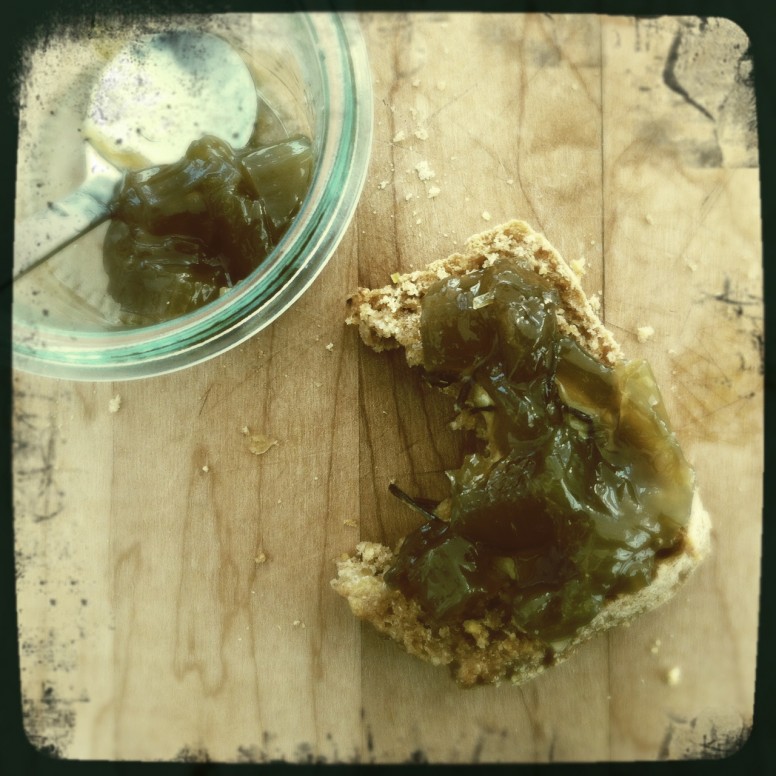
I love apple butter and I love dried chiles so I thought, why not? I like a butter that is barely on the sweeter side of sauce – as in an applesauce. You could take it up to 2 whole cups and it still wouldn’t be overly sweet. I added the vinegar because these fallen apples are way past their earlier puckery punch. It was a good choice. The ancho and allspice together add a nice depth. In an odd spoonful here and there I can taste the clean, almost herbal ancho note. I think to catch it in every spoonful, I would up the ancho to 2 whole teaspoons next time.

Note to self – next October, make 15 pounds of apples’ worth because these 4 & 1/2 pints are going to fly off the larder shelves! Quickly!

Ramp Greens Kimchi

Perhaps you jumped on the spring rampage with me and pickled a whole lotta ramp bottoms a few days ago. Which means you got a bunch (or two or three) of ramp greens sitting around waiting for you to fulfill their destiny.

Here’s my version:

Ramp Greens Kimchi

Apple Pectin (& Confiture de Vieux Garçon)

Johnny Appleseed is my homey. Well, at least he would have been if I had lived in the 1700’s. He was born in Massachusetts – and traveled all around these parts. And yes, he was the stuff legends are made of, but he was a real live person. He planted apple trees everywhere around the northeast and on through to the Midwest. It’s true!

Trees like this:

I love this tree.

Even though it’s a bit old, it was here long before I got here (maybe J. Apple really did plant it!).

This ‘ole tree bares a lot of apples! Way more than we could eat out of hand or even out of jelly or jam. Way more fruit than the three little gooseberries-that-try bushes I have.

So what the hell am I doing using up all my gooseberries for a pectin boost? It’s July peeps! It’s apple pectin making month! …And green apples are everywhere!

Thanks to Johnny!

Green Apple Pectin

Ingredients:

As many pounds of green (unripe) apples as you like
double the amount of cups of water

Yeild: approximately one cup pectin stock per pound of apples

Directions:

1. Stem & coarsely chop apples, blemishes are fine to leave in but discard any parts gone bad, bruises or worm bits. 🙂 Make sure to leave cores and seeds in.

2. Place in non-reactive pan (stainless or enameled iron only) and add water. Bring to a boil, reduce heat and simmer for 20 minutes. Stir a few times throughout to make sure all apples get saturated.

3. Line a colander with cheesecloth or butter muslin and place over a bowl. Pour in cooked apple mixture. Let drain for 2 hours.

4. Return strained liquid to pan and boil down by half.

Place in fridge to use in 2 weeks, freeze for up to 2 months, or hot water bath can for larder storage up to a year. If you choose to hot water bath, leave 1/4 inch headspace and process for 10 minutes.

gap

2/3 cup of good apple pectin stock will be sufficient to set 4 1/2 pounds of medium or low pectin fruit to jam.

To make jelly use equal cups of stock & sugar, and some added lemon juice. Generally 2 tablespoons of lemon juice to 3 cups stock/3 cups sugar will do it. It’s July!

Get out & get some pectin-making apples – and thank Johnny Appleseed while you’re at it!
I’ve managed to find organic strawberries and raspberries so far. Sadly I missed the cherry season, it was impossible to find unsprayed cherries in the Berkshires!

The strawberries went in the third week of June. They are a very strange color and I was a bit worried. But I don’t detect any odd smell so I’m staying with it. The raspberries were put in a few days ago.

I’ve learned a few more things so far:

1. It’s best to weigh the fruit down. You can use a plate if you have one that fits. I used the weights that came with the crock and I think they are a bit heavy for soft fruit like berries.

2. It’s pretty hard to wing it & try to cover the fruit with sugar by sprinkling it over as I had originally planned. And the shape of this crock makes that action particularly hard to do. So I am going to add sugar at 1/2 the weight of the fruit. I’ve also read that to avoid sugar granules in your final product it is best to let the fruit sit for one hour in sugar and macerate. I’ll add sugar to fruit in a bowl, let it sit for an hour and then add to crock moving forward.

3. I went with kirsch, which is traditional for summer fruits. But any spirit will do as long as it is 80 proof, or 40% by volume.

Spring Rampage Pickles

Up here in the Berkshires of Massachusetts, these babies are in full bloom right now.

But you could do spring onions if that’s what’s sprouting in your hood. My neighbor brought over this lovely jar of homemade maple syrup. He doesn’t like to boil it down as much as the store-bought stuff. I call it maple honey.

If you don’t have a neighboring farmer making maple syrup or honey, I’m sure you have some neighboring bees making flower honey.

And this is the fun part. Herbs! What herbs are you or your local farmer growing now?

My lovage is forever the first to come soaring out of the ground each spring. Its taste is that of robust Italian parsley with a few ornery celery leaves strewn in. You could always use that mix to replicate this lovely herb. (But make sure those celery leaves are really ornery, like they should be shouting at you).

These pickles, my friends, are positively exploding with the taste of spring! Your turn – gather up a local edible allium, herb and sweetener and we’re in business!

Canning 101

Here’s the post I am going to refer you back to again and again. These are the basic steps in hot water bath canning which means boiling the filled jars until they are hermetically sealed. This vacuum packed seal, along with the acidic contents keeps the food safe from bacteria and in particular clostridium botulinum.

Whenever we ‘can’ or preserve jams and pickles in this way they can be stored in a cool, dark place for a year or more, and do not have to be put in the fridge until they are opened. The hot water bath canning method only works safely with high-acid foods, i.e. fruit preserves & pickles. So please for safety reasons, follow the recipes and these directions completely and accurately, or, you can put your preserves directly in the fridge and skip this part. But, this is the fun part; in fact
you’ll most likely have a ball!

Steps in Hot Water Bath Canning

1. Clean jars with hot soapy water or in dishwasher.

2. Pre-heat jars by placing open, empty jars on rack in canning pot and lower down. If you do not have a rack, you can place some screw tops down first to keep the jars from touching the bottom of the pan. Fill canning pot with hot water until the jars are full. Place lid on canning pot and heat on cooktop until hot but not boiling.

Note

Note: if the recipe states to boil the filled jars for 10 minutes or longer then the jars do not have to be sterilized at this step. If the recipe states to boil the filled jars less then 10 minutes then you will want to sterilize them here. Just boil the empty jars for 10 minutes at a full rolling boil.

3. Prepare recipe while jars are heating, keeping jars hot until ready to be filled.

4. Heat jar tops 5 minutes before jars are to be filled. Place flat lids of mason jars, or the rubber gaskets for weck jars in a bowl with hot water (this water should not be boiling). Do not place metal screw caps in heated water, but you should place the weck glass tops in the heated water also if using.

5. Remove each jar as needed when food is ready to be processed. My rack hangs on the side of pot so I lift the entire thing up for easy access to the jars. This is where either a jar lifter or a silicone glove comes in handy. Place a folded kitchen towel on counter and place hot jar on towel (a hot jar placed directly on a cold counter top could break). No need to dry jar before filling. I turn it upside down and give it a couple of pats on the towel to shake out any excess water.

6. Fill jars one by one and food can either be ladled or sometimes poured into jar. Here is where I use my trusty funnel. Headspace is very important. Too much space between food and top of jar and it may not seal correctly. Too little and the food my be forced out of jar during boiling. As a general rule 1/2 inch headspace is perfect. Unless otherwise stated in the recipe food should always be processed immediately following the cooking stage, i.e. still hot.

note

7. Remove air pockets by running a small rubber spatula or chopstick around the side of the jar. For most jams you will not have to do this, but if there are large pieces of fruit, or with most pickles you will notice air pockets and will want to get rid of them to ensure a proper seal.

8. Place lids on jars after wiping rim with a damp paper towel to remove any misplaced food. Place the flat lid on if using mason jars, or the rubber gasket and glass lid if using weck jars. For the masons put the screwcaps on and tighten with fingertips. this means that you want the screw cap secure but not overly tight. For the wecks once you have the rubber gasket encircled around the inside of the glass top and placed on top of jar, put two metal clips on, directly across from each other.

note

9. Adjust water to cover by 1 inch once jars are full and lowered back down into pot. if you have different size jars in the canner, cover the tallest one by 1 inch. Note that jar size should not vary too much within a recipe.

10. Process jars according to individual recipe as processing times vary and are based on size of jars, density and composition of food. Processing is the amount of time the jars must be immersed in a full rolling boil. Do not start timing until the boiling becomes steady & vigorous. The water must remain at a full rolling boil throughout. A kitchen timer is helpful here for accuracy. For safety reasons and to ensure that the food does not overcook, do not alter the processing time.

note

Note on high altitude canning: the higher your elevation, the lower the temperature at which water boils. If you are over 1000ft adjust as follows:

1001-3000 ft: increase processing time by 5 minutes
3001-6000 ft: increase processing time by 10 minutes
6001-8000 ft: increase processing time by 15 minutes
8001-10,000 ft: increase processing time by 20 minutes

11. Leave jars in pot for 5 minutes at end of processing time. Once heat is off and lid is lifted, a few minutes here will allow for adjustment to temperature change. I lift the rack up and hang it over the sides so that the jars are not in water, but they can be left down below also.

12. Lift jars out of canning pot with either a jar lifter, or using a silicone glove and place on kitchen towels. Try not to tilt jars excessively. Do not adjust the screw caps or metal clips, do not worry about any water gathered on top of jars. Let jars rest for 12 to 24 hours to cool completely. You may hear popping noises from the masons, this is the sound of the jar sealing.

note

13. Check the seals after the 12 to 24 hour cooling period. For the masons push down in the center of lid. You should not hear a metal popping noise, and it should concave slightly. For the wecks the tab on the rubber gasket should be pointing down. Take off the screw caps or the metal clips and here is the real test: use your fingertips to pick up the jars by the lid only. If it is properly sealed you will be able to do this. If it isn’t the lid will come off and the contents of the jar will spill everywhere. So do it slowly and with your other hand under the jar.

Note: If any jars failed to seal, you can wipe the rim and try again using a new flat top or rubber gasket. If it is only one or two jars the easiest solution might be to put them directly in the fridge and enjoy immediately, as in some cases reprocessing overcooks the food and affects quality.

note

14. Store the jars in a cool, dark place without the screw caps or metal clips. This means out of direct light and in a temperature range of 55 to 78 for best keeping quality. Labeling the jars with date and contents is important because no matter how much you think you will remember what is what, you won’t. Trust me.

15. Examine each jar before opening by checking for bulging or leakage, and rechecking the seal as described above. If seal has come undone or you notice anything funny, do not eat contents, discard food and sterilize jar. Screw caps or metal clips should be refastened after opening for fridge storage.

If you follow these steps and the recipes accurately, you will have many jars of good and safe eats! for a list of canning equipment go here. Time to get cannin’ peeps!

But safety first…so read up, cause I’m not doing this for my health ya know …oh wait, and yours too!

Tigress Can Jam: A Food Blog Challenge!

Gap

This past few months we’ve talked about the trend of canning, witnessed the beginning of the canvolution and a rise in bloggers who, like me, can’t resist the urge to share about pickling, jamming, mason jars and the like. From fellow preservationists’ blogs devoted mainly to the craft, like food in jars, well preserved, and put up or shut up! to other crafty cats that count canning high on their list of homesteading and/or cooking skills, like small measure, gluten free girl & the chef, etc., etc.!

What can I say?

I like this! IMO canning is catching on because even though it harks back to old food ways, it is so right now-

Local – I think many of us became interested in canning as an outgrowth of the locavore movement. Preserving fresh produce grown in your area is the logical progression. And when you grow your own, and a glut is on, it can become a necessity!

Organic – In an effort to control what we eat, be it produce, sweeteners, flavors, etc., when we make it ourselves we know what went into it, and we know how we like it. It’s having a real choice about what we consume.

In season – Canning produce in season in a way, keeps it in season all year. Ergo a much tastier interpretation of eating seasonally than abstaining altogether but once a year!

Hot water bath canning can contain anything that can safely be preserved by the hot water bath method. So I’m talkin’ about sweet or pickled preserves.


Buckwheat Pumpkin Pancakes with Aromatic Apple Topping

0

Since I discovered these pancakes with aromatic apple topping and cinnamon, my cold and dark winter mornings have a completely different flavor.

Do you know what it’s like when you can’t get out of the warm bed and the dream that carried you to who knows what warm lands? Just the thought that in 10 minutes, their smell spread throughout the house gives me another zest for life. You can’t resist their perfectly fluffy texture, sweet and aromatic taste!

In addition, they contain seasonal ingredients, which makes them an excellent alternative to those with banana pancakes. Just like the other pancakes recipes from the blog, these are also good for a pre-workout meal. It’s best to use nuts or natural peanut butter as topping rather than maple syrup. And if you want to enjoy them after your workout, I recommend you include some extra protein content in there, like plain Greek yogurt.

The homemade apple topping sauce has a vibrant aroma and is much better than the one bought at the supermarket. It can be a healthy snack for children (especially if it has no added sugar), but it can also be used in various recipes for both sweets and main courses.

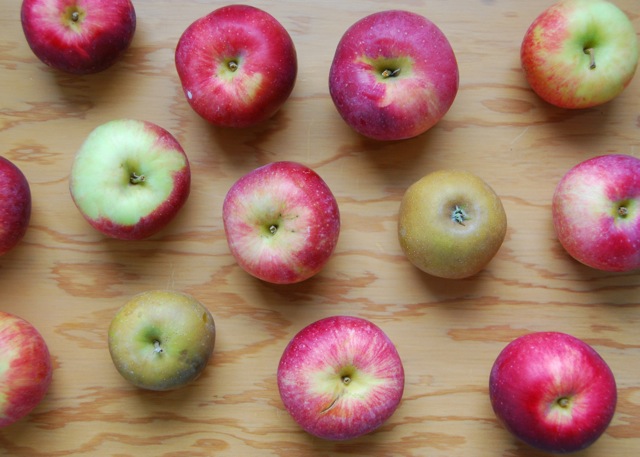
It is best to use 2-3 varieties of apples to get a mixture of flavors. There are no rules, any apples you can find in the market: Jonathan, Golden Delicious, Red Delicious, Idared, Granny Smith. It doesn’t matter. They’re all excellent.

This sugar-free apple topping recipe is very easy to prepare as well as quick. All you need is apples and water, and pumpkin spices; adding maple syrup or honey is optional for people who want a sweeter sauce. You can use apple sauce in combination with pancakes, being an ideal substitute for eggs for cakes, sweet bread, or muffins. You can also use it as a topping for ice cream, milkshakes, and pies.

The recipe consists of two parts: making the pancakes and making the delicious aromatic apple filling.

Buckwheat Pumpkin Pancakes

Necessary equipment:

  • a large mixing bowl
  • a whisk
  • a medium mixing bowl
  • a rubber spatula

Ingredients:

8 large pancakes or 16 small ones

  • 1 1/2 cup of buckwheat flour
  • 1 cup of quick oats
  • 3 teaspoons of baking powder
  • 1 teaspoon of cinnamon
  • 2 teaspoons of pumpkin pie spice
  • 1 teaspoon of baking soda
  • 2 3/4 cup of unsweetened plant-based milk (soy, almond, oats, coconut)
  • 1 cup of pumpkin puree
  • 2 teaspoons of chia seeds
  • 1 teaspoon of pure vanilla extract
  • coconut cooking oil spray for cooking
  • 1/4 cup unsweetened coconut chips

Instructions:

  1. Mix the flour, oats, baking powder, cinnamon, pumpkin pie spice, and baking soda in a large mixing bowl.
  2. In a medium bowl, mix the milk, pumpkin puree, vanilla extract, and chia seeds.
  3. Add the wet ingredients to the dry ones and whisk them together thoroughly but slowly until the consistency is completely smooth.
  4. Heat a pan over medium heat and spray it with coconut cooking oil.
  5. Pour about 1/4 cup of the batter onto the pan (depending on the size of the pancakes you want to achieve).
  6. Sprinkle the chocolate chips on top of the batter.
  7. When you see bubbles forming, use a spatula to flip the pancake gently.
  8. After flipping, turn off the heat and cover the pan with a lid. Leave to cook for another minute. Repeat the procedure for the remaining batter.
  9. Serve how with the aromatic apple topping on top! See the recipe below.

Aromatic Apple Topping

Necessary equipment:

  • a grater
  • a medium saucepan
  • a rubber spatula

Ingredients:

  • 3 large apples (any kind you prefer)
  • 4 tablespoons of filtered water
  • 2 teaspoons of pure vanilla extract
  • 2 tablespoons of pumpkin pie spice
  • 1 teaspoon of cinnamon powder

Instructions:

  1. Wash and use a grater to grate the apples. Keep their peel on.
  2. Transfer the grated apples to a Heated medium-sized saucepan.
  3. Cover with a lid and cook for about 3-4 minutes on low heat.
  4. Add 2 tablespoons of water and pumpkin pie spice. Stir everything together and cook for another 3 minutes under a cover.
  5. Add the remaining 2 tablespoons of water and vanilla extract. Stir and leave to cook under a cover for another 5 minutes.

It can be stored in the refrigerator, in a very tightly closed jar, for a maximum of two weeks. If you want to keep it longer than that, let it cool completely after cooking and put it in a freezer bag. It will keep in the freezer for a maximum of two months.