

For passionate home cooks and small-scale artisanal food business owners, ingredient preservation is an everyday challenge. The kitchen pantry is the heart of culinary creativity, but it is also where moisture, air, and pests constantly threaten your carefully sourced ingredients. Spices lose their volatile oils, flour absorbs ambient humidity, and delicate dry goods can quickly become stale if not properly secured.
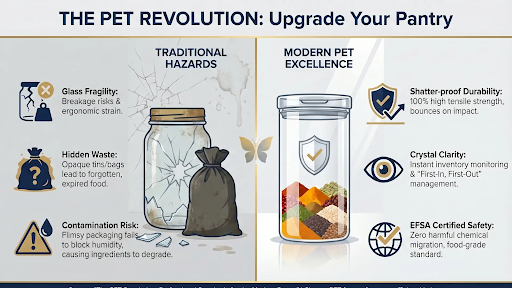
Historically, solving this problem meant relying on an assortment of mismatched jars, flimsy plastic bags, or bulky glass containers. While these traditional methods provided basic storage, they often fell short in terms of space optimization, safety, and long-term food preservation. The modern culinary landscape demands a more sophisticated, systematic approach to ingredient management.
Today, bridging the gap between professional restaurant efficiency and home kitchen aesthetics is easier than ever. The secret lies not just in how you organize your shelves, but in the specific materials you choose for your storage solutions. A revolution in food-safe packaging is rapidly changing how culinary enthusiasts manage their pantries.
Why Material Matters: Beyond Just “Airtight”
When attempting to build the perfect pantry, many home chefs mistakenly focus solely on finding an “airtight” seal. While preventing oxygen exchange is critical for delaying oxidation, the actual material of the container plays an equally vital role. Traditional glass has long been favored for its non-porous nature, but it carries significant practical drawbacks in a busy kitchen environment.
Glass containers are inherently heavy, making large-scale pantry organization cumbersome and physically demanding. More importantly, their fragility poses a constant safety hazard; a single dropped jar can result in dangerous glass shards contaminating your workspace and food. This has led culinary professionals to seek advanced alternatives that combine the clarity of glass with unmatched durability.
Polyethylene Terephthalate (PET) has emerged as the premier choice for modern, high-efficiency kitchens. This advanced food-grade plastic offers exceptional barrier properties, protecting sensitive ingredients from ambient moisture and subtle temperature fluctuations. It delivers the pristine transparency of glass without the structural vulnerabilities, transforming how ingredients are managed. For dedicated home cooks, selecting the right material is about more than just durability; it is a fundamental aspect of food safety. Many high-standard modern kitchens are shifting toward professional-grade food packaging solutions to preserve their premium ingredients. For instance, manufacturers like Outstandingpack provide compliant, food-grade PET containers specifically designed to ensure long-term ingredient stability and clarity, allowing home kitchens to achieve commercial-grade storage standards.
The Benefits of Modern PET Packaging for Home Cooks
Integrating commercial-grade materials into a residential kitchen dramatically elevates the cooking experience. The shift to PET containers is not merely a trend; it is a scientifically backed approach to reducing food waste and improving workflow. By understanding the specific benefits of these materials, you can redesign your pantry for maximum culinary efficiency.
Lightweight Durability
The fast-paced nature of cooking requires tools and storage that can withstand heavy, repeated use. PET containers excel in this area due to their high tensile strength and shatter-proof molecular structure. If a container is accidentally knocked off a countertop during a busy meal prep session, it will simply bounce rather than break.
This durability makes PET exceptionally safe for households with young children or pets, completely eliminating the risk of broken glass. Furthermore, the lightweight nature of the material makes it incredibly easy to retrieve large volumes of ingredients, such as flour or rice, from high pantry shelves. This ergonomic advantage significantly reduces physical strain during daily cooking tasks.
Visibility and Organization
One of the leading causes of food waste in home kitchens is a lack of ingredient visibility. When dried goods and spices are hidden in opaque packaging or dark tins, they are easily forgotten and left to expire. High-quality PET packaging offers crystal-clear transparency, allowing cooks to instantly identify contents and monitor inventory levels at a glance.
This visual clarity is an essential component of the ultimate guide to pantry organization. When every ingredient is uniformly displayed, you naturally adopt a “first in, first out” inventory system used by professional chefs. It not only streamlines meal preparation but also creates an aesthetically pleasing, magazine-worthy pantry space that inspires culinary creativity.
Best Practices for Storing Homemade Sauces, Spices, and Dried Goods
Once you have upgraded your storage materials, applying correct preservation techniques will maximize the shelf life of your ingredients. Homemade goods, lacking the artificial preservatives found in commercial products, require meticulous storage conditions to remain safe and flavorful. The primary enemies of these artisanal creations are heat, light, and moisture.
For dried goods like grains, pasta, and legumes, maintaining a low-humidity environment is non-negotiable. Always ensure your PET containers are completely dry before transferring newly purchased ingredients into them. Adding a food-safe silica gel packet to the bottom of the container can provide an extra layer of defense against ambient humidity, preventing clumping and mold.
Spices and delicate herbs demand a slightly different approach to preserve their volatile aromatic compounds. They should be stored in smaller, airtight containers and kept strictly away from direct sunlight and heat sources, such as ovens or stovetops. Exposure to heat accelerates the degradation of their essential oils, resulting in bland, flavorless seasoning over time.
When storing wet ingredients like homemade sauces or infused oils, temperature control becomes the deciding factor in food safety. While PET packaging provides an excellent physical barrier, these perishable items must still be refrigerated to prevent bacterial growth. Always leave a small amount of headspace at the top of the container to allow for slight expansion during cooling.
Selecting Sustainable and Food-Safe Containers
As consumers become increasingly conscious of both health and environmental impact, selecting the right packaging requires careful consideration. Not all plastics are created equal, and distinguishing between generic storage bins and true food-grade materials is vital. Polyethylene Terephthalate (PET) is globally recognized for its safety profile and chemical inertness.
When storing homemade sauces or dried goods, the chemical stability of the container is absolutely crucial. According to scientific advice on food contact materials from the EFSA, selecting compliant materials is the first line of defense against the migration of harmful substances. Always verify that your containers hold proper food-safety certifications, which is a necessary step to ensure your ingredients remain untainted.
Furthermore, PET is one of the most widely recycled plastics in the world, making it a responsible choice for eco-conscious kitchens. Unlike single-use plastic bags that end up in landfills, durable PET containers are designed for years of continuous reuse. When they finally reach the end of their lifecycle, they can be efficiently processed and repurposed into new products.
By choosing highly durable, recyclable materials, home cooks can align their culinary passions with healthy eating principles and environmental stewardship. It represents a holistic approach to kitchen management, where the safety of your family, the quality of your food, and the health of the planet are all prioritized equally.
Key Takeaways
| Area | Key Takeaway | Impact/Data |
| Safety Risk | Eliminate glass; switch to PET | Zero shattering; 100% hazard reduction |
| Handling Ops | Deploy lightweight PET for bulk | Reduces physical strain during prep |
| Inventory Mgmt | Utilize crystal-clear transparency | Enables FIFO; slashes food waste |
| Food Safety | Use EFSA-compliant chemical barriers | Prevents migration; extends shelf life |
| Sustainability | Procure widely recycled PET | Ensures long-term reuse and recyclability |
Conclusion
The evolution of pantry storage has moved far beyond simple glass jars and easily torn bags. By adopting professional-grade PET containers, home cooks and small culinary businesses can protect their valuable ingredients with scientific precision. This transition offers the perfect balance of lightweight durability, crystal-clear visibility, and uncompromising food safety.
Ultimately, your pantry is the foundation of your cooking journey. Investing in high-quality, scientifically vetted storage solutions is an investment in better meals, reduced food waste, and a more streamlined kitchen experience. Upgrade your material choices today and experience the profound difference that professional packaging can make in your daily culinary creations.